





Snoring is one of those problems that’s funny until it’s 3 a.m. and nobody in the house is sleeping. If you’re looking for how to stop snoring, the good news is that most snoring responds to simple changes — position, habits, and bedroom setup fix it for a lot of people. Let’s go through what […]
Snoring is one of those problems that’s funny until it’s 3 a.m. and nobody in the house is sleeping. If you’re looking for how to stop snoring, the good news is that most snoring responds to simple changes — position, habits, and bedroom setup fix it for a lot of people. Let’s go through what actually works, in order of easiest first.
A quick note on what snoring is: when you sleep, the muscles in your throat relax, and air moving past the narrowed airway makes the surrounding tissue vibrate. That’s the sound. Anything that narrows the airway further — congestion, back-sleeping, alcohol — makes it louder.
12 Practical Ways to Stop Snoring
1. Sleep on your side
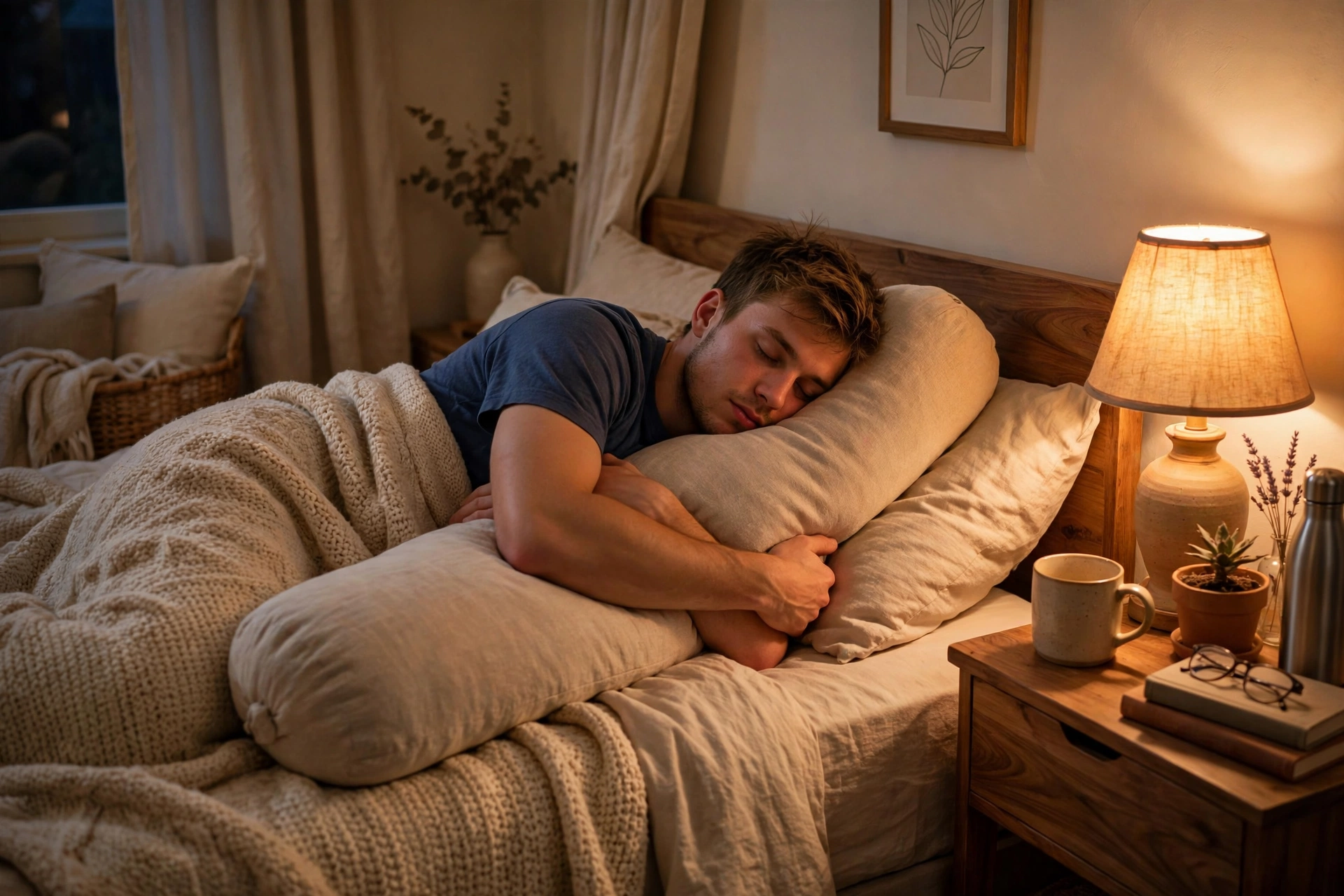
Back-sleeping lets the tongue and soft palate collapse backward into the airway. Side-sleeping keeps things open. If you always roll onto your back, try hugging a body pillow — it makes staying on your side feel natural.
2. Raise the head of your bed
Prop the head of the bed up 3–4 inches (blocks under the bed legs, not just extra pillows, which can kink your neck). Gravity helps keep the airway open.
3. Clear your nose before bed
Congestion forces mouth-breathing, which worsens snoring. A warm shower, saline rinse, or simply blowing your nose well before sleep can make a real difference during allergy season.
4. Try nasal strips or a dilator
Those little strips across the nose bridge physically hold the nostrils open. They won’t fix throat-based snoring, but for nose snorers they’re cheap and worth a try.
5. Skip alcohol in the evening
Alcohol relaxes throat muscles more than sleep alone does — which is exactly why snoring gets louder after drinks. Cutting off alcohol 3–4 hours before bed helps noticeably.
6. Keep bedroom air moist
Dry air irritates the nose and throat lining. A humidifier in dry climates or winter months reduces that irritation, especially if you wake up with a scratchy throat.
7. Change your pillows
Old pillows collect dust mites and allergens that trigger nighttime congestion. Replace pillows every 1–2 years, and consider allergen-proof covers if you’re sensitive.
8. Stick to a sleep schedule
Overtired muscles relax more deeply, which means louder snoring. A consistent bedtime — yes, even on weekends — leads to lighter, quieter muscle relaxation.
9. Wind down before bed
A calm pre-sleep routine (reading, stretching, a few minutes of journaling) helps you fall asleep faster and sleep more soundly. If your mind races at night, writing things down before bed genuinely helps — here’s a beginner-friendly guide on how to write a book if journaling ever turns into something bigger.
10. Stay hydrated
Dehydration thickens the secretions in your nose and throat, making them stickier and the vibration louder. Drink water through the day, not just at bedtime.
11. Try throat and tongue exercises
Sounds odd, but studies show that a few minutes of daily mouth and throat exercises (pressing the tongue to the roof of the mouth, sliding it backward, repeating vowel sounds exaggeratedly) can strengthen airway muscles over several weeks.
12. Address extra weight gradually
Extra tissue around the neck narrows the airway. Even modest, gradual weight loss can reduce snoring volume for people where this is a factor. No crash diets — slow and sustainable.
When Snoring Needs a Doctor
Most snoring is harmless noise, but see a doctor if the snoring comes with any of these:
- Loud snoring most nights, loud enough to hear through walls
- Pauses in breathing or gasping during sleep (a partner usually notices this first)
- Waking up with headaches or a very dry mouth
- Daytime sleepiness despite a full night in bed — dozing off at your desk or in traffic
That combination can point to sleep apnea, where breathing repeatedly stops and starts through the night. It’s common, it’s treatable (CPAP machines, mouth devices, and positional therapy all work well), but it needs a proper sleep study to diagnose. Don’t try to self-diagnose this one — and don’t ignore it either, since untreated apnea strains the heart over time.
FAQs
Does sleeping on your side really stop snoring?
For many people, yes — it’s the most effective single change. It doesn’t help everyone (some people snore in every position), but it’s free and worth trying first.
Do nasal strips actually work?
They work for nasal snoring — when the noise comes from narrowed nostrils. They do little for snoring that originates in the throat, which is the more common source.
Can losing weight stop snoring?
It can reduce it, especially if weight gain coincided with the snoring starting. It’s one factor among many, not a guaranteed fix.
When should I see a doctor about snoring?
When it’s loud and nightly plus daytime symptoms (sleepiness, morning headaches, witnessed breathing pauses). That’s the sleep-apnea pattern, and it deserves a medical look.