





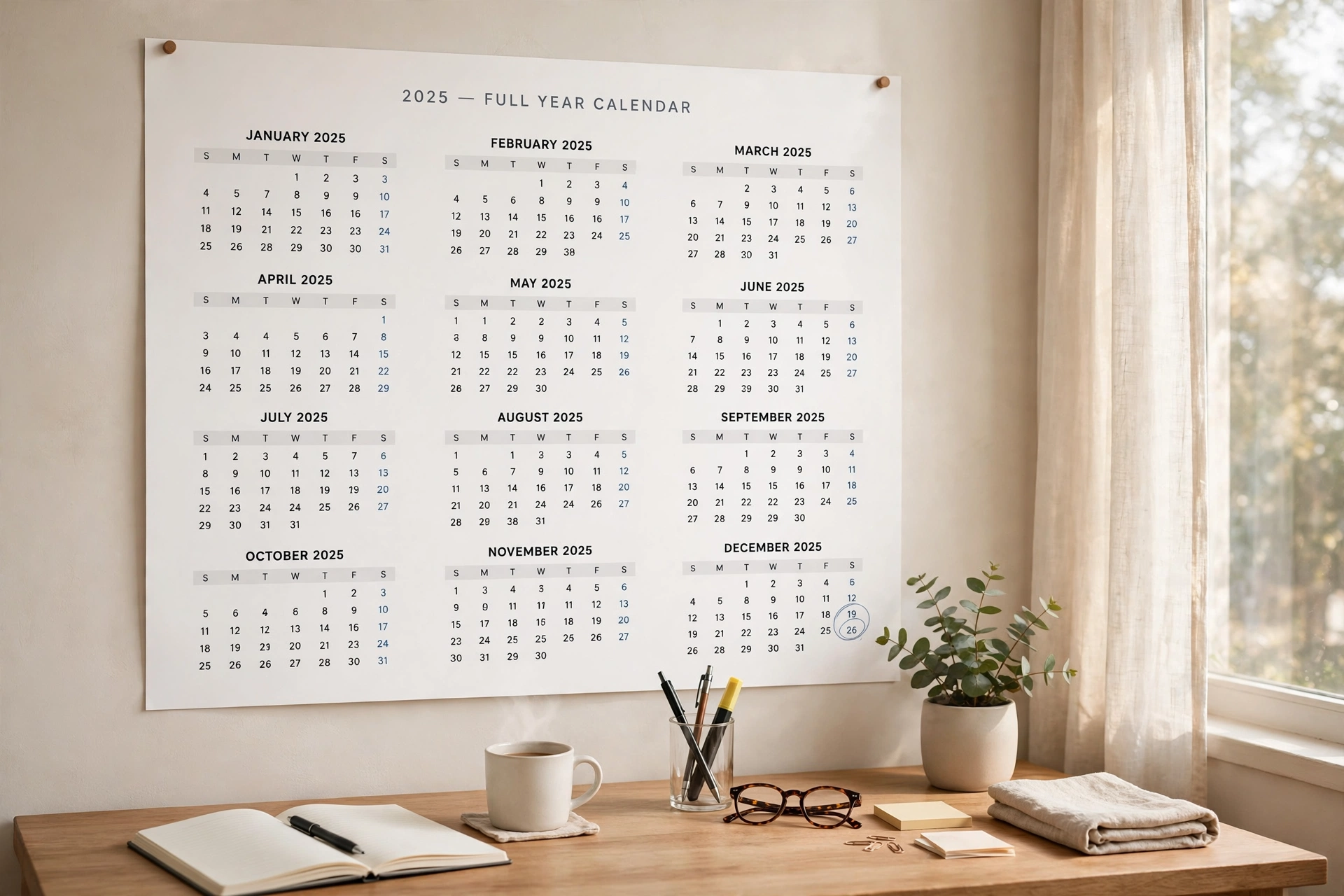
So, how many weeks are in a year? The short version: 52. A standard year packs in 52 full weeks, with one extra day left over. That is the number your calendar app, your payroll office, and pretty much every planner on the shelf all agree on. But that leftover day is where it gets […]
So, how many weeks are in a year? The short version: 52. A standard year packs in 52 full weeks, with one extra day left over. That is the number your calendar app, your payroll office, and pretty much every planner on the shelf all agree on.
But that leftover day is where it gets fun. Why isn't it a clean number? What changes in a leap year? And why do some people insist certain years have 53 weeks? Let's get into it.
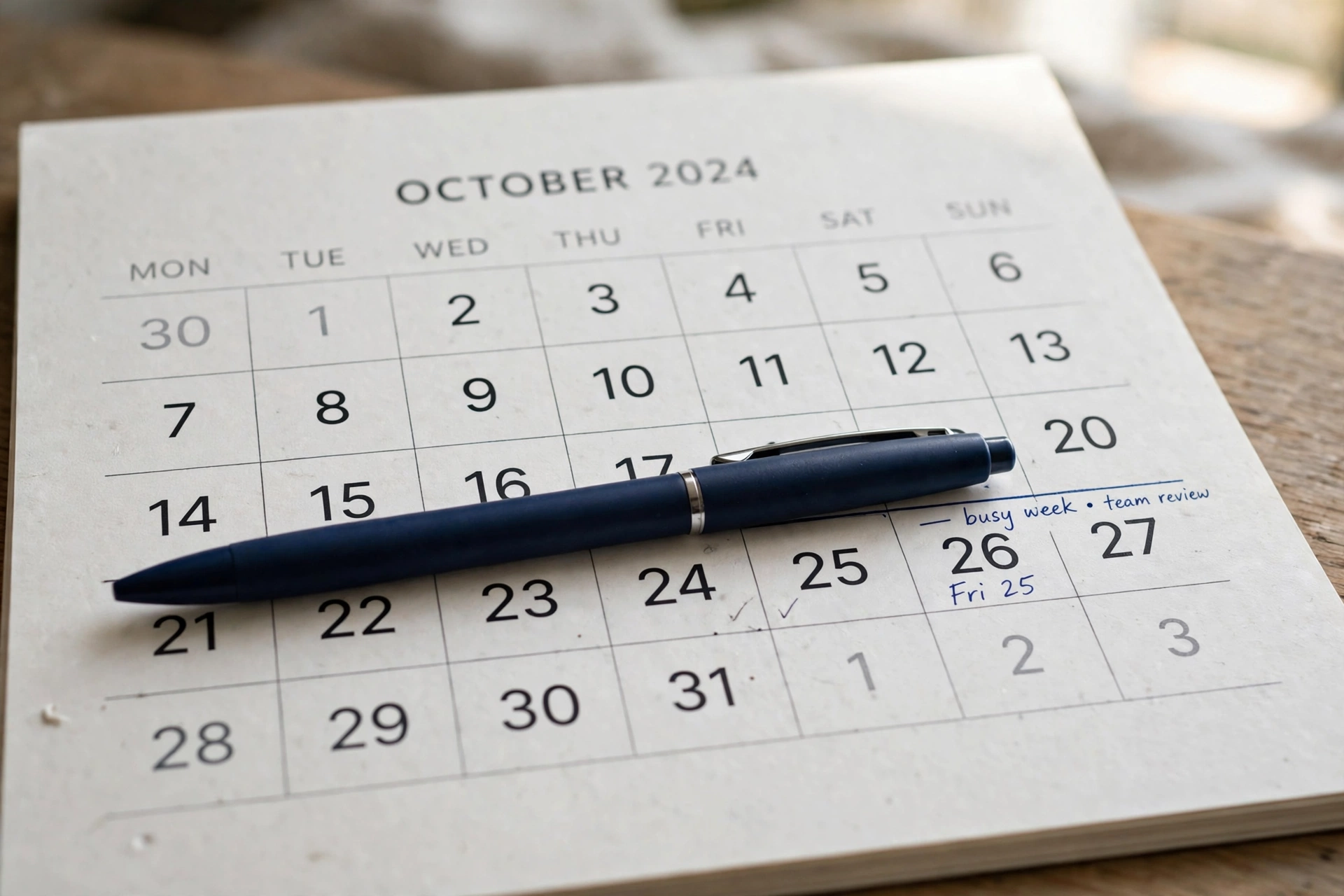
The Quick Answer: 52 Weeks and a Day
Seven days make a week. Multiply 52 by 7 and you land on 364 days, one short of a full year. So a regular 365-day year holds 52 complete weeks plus a single stray day. Do the division, 365 divided by 7, and you get 52.14 — and that .14 is the extra day showing its work.
Picture it like this: if January 1 falls on a Monday, the year gives you 52 full Monday-to-Sunday stretches, then one last Monday to tie things off.
Why It Is Never a Round Number
Blame the math, not the calendar. Seven simply does not divide into 365 without a remainder. It is like splitting 365 cookies among seven friends and finding one left in the jar. That leftover day is also why New Year's Day creeps forward one weekday each year. Start the year on a Monday, and next January 1 will be a Tuesday. If you want the full backstory on where the 365 comes from, here is how many days are actually in a year.
Leap Years: 52 Weeks, Two Days Left Over
Roughly every four years, February borrows an extra day and the year stretches to 366 days. Divide that by seven and you get 52.29. Still 52 full weeks, now with two days to spare instead of one.
The label does not change. Common year or leap year, everyone still says "52 weeks." The remainder just gets a little bigger.
The 53-Week Twist (ISO Calendars)
Here is where people get tripped up. The ISO week-date system, the international standard used in business and manufacturing, numbers the weeks of the year. Most years get 52 numbers. Some get 53.
The rule is simple: a year earns a 53rd ISO week when January 1 falls on a Thursday, or on a Wednesday in a leap year. The most recent one was 2020. Fitting, somehow, that the longest-feeling year in recent memory literally had an extra week. 2015 and 2009 had them too.
What About 2026?
Here is a fun one. 2026 is an ordinary 365-day year: 52 full weeks, one extra day. But January 1, 2026 lands on a Thursday, which makes 2026 one of those rare years with 53 ISO week numbers, W01 through W53. Same 365 days, just numbered differently.
Why You Would Ever Need to Know This
Paychecks, for one. Most salaried folks paid every two weeks get 26 paychecks a year. But about once every seven years, the calendar squeezes in a 27th biweekly pay period. That extra paycheck is real money, and people who plan for it tend to put it straight toward savings or debt instead of spending it.
Planning is the other big one. Workout programs, course schedules, project timelines, and the classic 40-week pregnancy countdown all run on weeks, not months. Time divides neatly into smaller units all the way down, and if you have ever wondered how the bottom of that ladder looks, here is how many seconds are in a single day.
How to Figure It Out Yourself
Take the number of days and divide by seven. That is the whole trick:
- Common year: 365 / 7 = 52.14 weeks
- Leap year: 366 / 7 = 52.29 weeks
The whole number gives you the full weeks. The decimal is the leftover days peeking through.
Frequently Asked Questions
How many weeks are in a year, exactly?
52 full weeks, plus one extra day, which works out to 52.14 weeks. In a leap year it is 52 full weeks plus two extra days, or 52.29 weeks.
Do some years have 53 weeks?
Under ISO week numbering, yes. Years that start on a Thursday, like 2026, get 53 numbered weeks. In plain day-counting terms, though, every year still has just 52 complete weeks.
Why is it not a nice even number?
Because 7 does not divide evenly into 365. That is the entire reason. It is also why New Year's Day shifts forward a weekday each year instead of landing on the same day.
How many biweekly paychecks are in a year?
Usually 26. But in years with 53 ISO weeks, which come around roughly every seven years, biweekly payroll lands 27 times. Worth checking your pay calendar before you budget.