




If you're learning how to say hi in Spanish, start with this: the word you need is *hola*. It works in every Spanish-speaking country, in every situation — the waiter in Madrid, your Mexican neighbor, a stranger at a bus stop in Bogotá. Say *hola* with a smile and you're already doing it right. Spanish […]
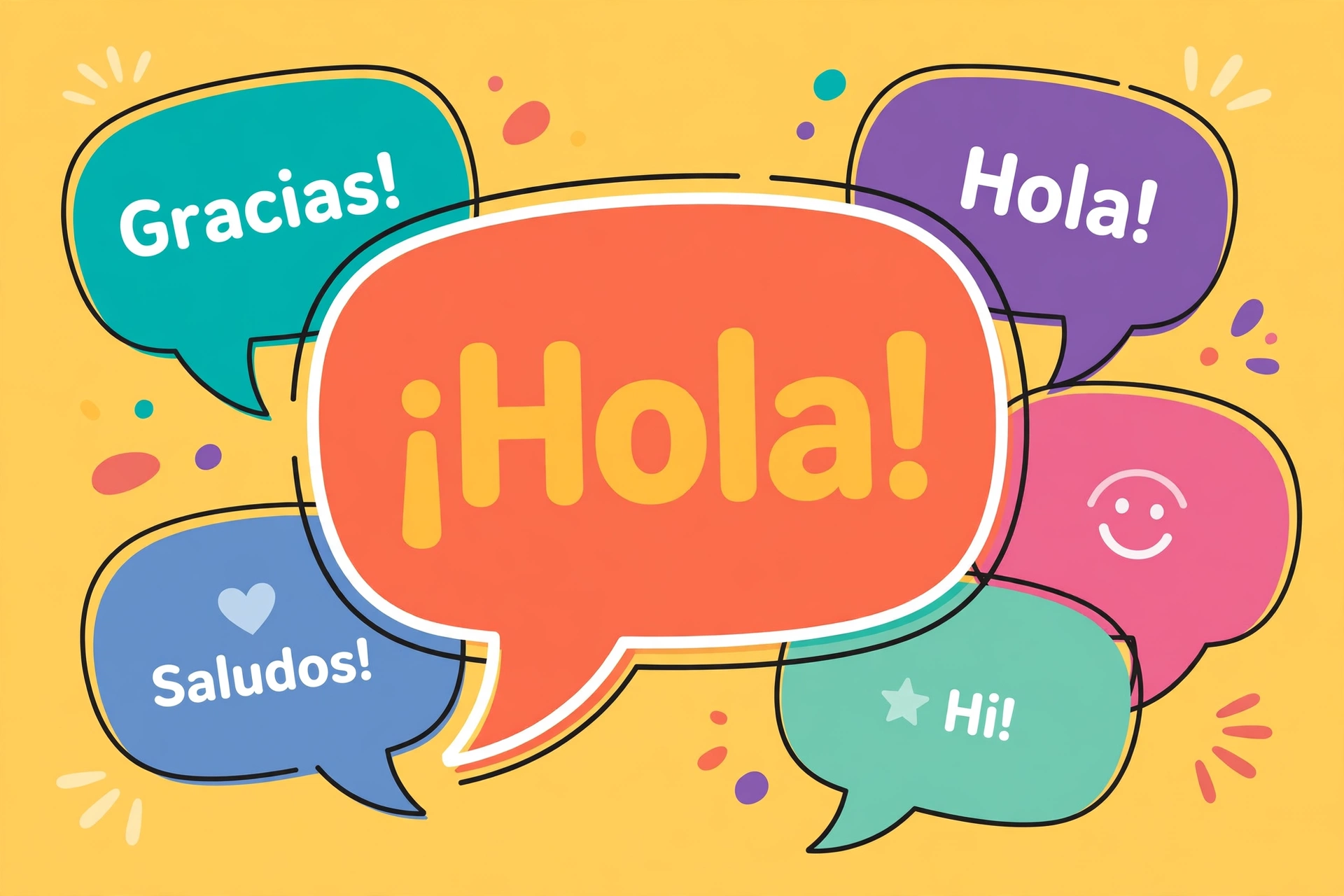
If you're learning how to say hi in Spanish, start with this: the word you need is *hola*. It works in every Spanish-speaking country, in every situation — the waiter in Madrid, your Mexican neighbor, a stranger at a bus stop in Bogotá. Say *hola* with a smile and you're already doing it right.
Spanish speakers don't stop at one greeting, though. The language has a small, friendly set of hellos that shift with the time of day and how well you know the person. None of them are hard. By the end of this guide, you'll be able to walk into a room of Spanish speakers and sound like you belong.

Start With "Hola"
*Hola* (OH-lah) is the universal Spanish greeting — not too formal, not too casual. Walking into a shop? *Hola.* Answering the phone? *Hola.*
One thing that trips up every beginner: the "h" in *hola* is silent. Spanish "h" never makes a sound. Say "OH-lah," never "HOH-lah." Nailing that on day one already puts you ahead of most new learners.
Greet by Time of Day
Add these three, and your Spanish immediately sounds natural. Spanish speakers use them constantly — far more than English speakers use ours. Walk past a coworker at 9 a.m. and skip *buenos días*, and some people will honestly find it rude.
Buenos días (BWEH-nohs DEE-ahs) — good morning, from sunrise to around noon.
Buenas tardes (BWEH-nahs TAHR-dehs) — good afternoon, from noon until sunset. Walk into a restaurant at 2 p.m.? *Buenas tardes* is the move.
Buenas noches (BWEH-nahs NOH-chehs) — good evening *and* good night. Arriving at dinner or leaving at midnight, it's the same phrase. Context does the work.
Bonus shortcut: after noon you can shorten these to just *buenas*. Casual, common, same meaning.
Casual Ways to Say Hi
among friends, nobody stops at *hola*. They follow it with a quick check-in — the Spanish version of "how's it going?"
- ¿Cómo estás? (KOH-moh ehs-TAHS) — how are you? The classic follow-up. The short answer you'll hear: *bien, gracias*.
- ¿Qué tal? (keh TAHL) — how's it going? Shorter and breezier.
- ¿Qué pasa? (keh PAH-sah) — what's up? Literally "what's happening?" Casual and friendly.
- ¿Todo bien? (TOH-doh bee-EHN) — everything good? A warm little check-in.
A real exchange looks like this: *"¡Hola! ¿Qué tal?"* — "Hi! How's it going?" That's it. Full, natural, done.
A Little Regional Flavor
Spanish spans 20+ countries, each with its own favorite casual greeting. In Mexico you'll hear ¿qué onda? (keh OHN-dah, "what wave?") everywhere — teens, coworkers, street markets. Answer with *bien, ¿y tú?* (good, and you?).
Argentina has its own twist: chau (CHAH-oo) works as both hi and bye.
Pronunciation in 60 Seconds
Spanish is phonetic — words sound like they look. Three rules cover almost every greeting:
- The "h" is silent. *Hola* = OH-lah. *Hasta luego* (see you later) starts with an "ahs" sound.
- The "j" sounds like an English "h." You hear it more in other words than in greetings, but it helps to know.
- Roll your "r" lightly if you can. A soft English "r" still gets understood, so don't let perfection stop you from speaking.
One more small thing: Spanish questions often open with an upside-down question mark — ¿ — as in *¿cómo estás?* It shows the tone before you read the sentence. You'll see it in texts and signs everywhere.
Formal vs. Casual: When Does It Matter?
Spanish has a formal "you" (*usted*) and an informal one (*tú*). In practice it's simple: with strangers, older people, and professional settings, pair a time-of-day greeting with ¿cómo está usted? With friends and people your age, *¿cómo estás?*, *¿qué tal?*, and *¿qué pasa?* are perfect.
When in doubt, start formal. If they want casual, they'll switch to *tú* themselves.
Practice It Out Loud
Say them, don't just read them. Narrate your own day: *buenos días* to the mirror in the morning, *buenas tardes* at lunch, *buenas noches* at night. Silly for two days, then it sticks.
Listening works just as well. Follow a few Spanish creators and you'll hear *hola* and *¿qué tal?* in real, unscripted speech hundreds of times. If you use social video apps, this guide to using TikTok shows how to find Spanish-language creators and train your feed to surface them.
And learn in small daily pieces — it's the same reason writing a book in 500 words a day works. A few greetings today, a few new phrases next week, and suddenly you're holding real conversations.
Frequently Asked Questions
What's the most common way to say hi in Spanish?
*Hola* — by a mile. Every country, all ages, every situation. If you learn exactly one Spanish greeting, make it this one.
How do you pronounce "hola"?
OH-lah. Two syllables, stress on the first, "h" completely silent. Pronouncing the "h" is the classic beginner mistake — drop it and you sound right instantly.
Is "buenos días" formal or casual?
It's neutral and safe everywhere. It leans slightly polite, which is why it's the go-to with strangers, shopkeepers, and coworkers. Close friends usually skip straight to *hola* or *¿qué tal?*.
How do Mexicans say "what's up"?
¿Qué onda? (keh OHN-dah). Extremely common in Mexico, casual but not rude. You'll also hear ¿qué pasa? and ¿cómo estás? in everyday conversation.