






Rice looks like the easiest thing in the kitchen. Water, pot, heat — what could go wrong? Plenty. Anyone who has ended up with a sticky lump glued to the pan, or crunchy grains swimming in water, knows the feeling. Fluffy rice is not luck. It comes down to three things: the right amount of […]
Rice looks like the easiest thing in the kitchen. Water, pot, heat — what could go wrong? Plenty. Anyone who has ended up with a sticky lump glued to the pan, or crunchy grains swimming in water, knows the feeling.
Fluffy rice is not luck. It comes down to three things: the right amount of water, leaving the lid alone, and giving the rice time to rest.
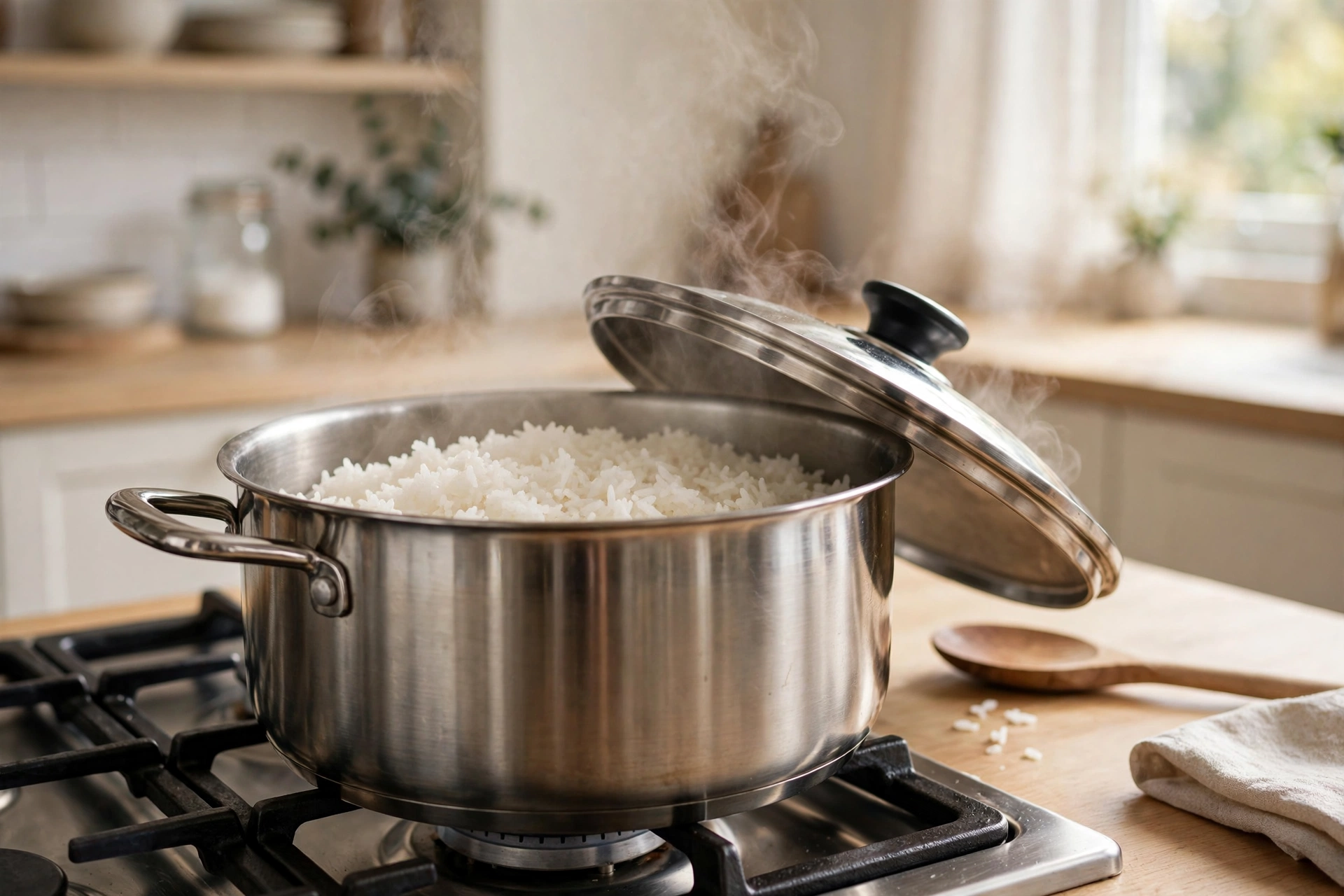
Why Rice Goes Wrong
Almost every rice disaster has one of three causes: too much water (mushy, porridge-like rice), peeking under the lid (steam escapes, so the top stays hard while the bottom goes soft), or skipping the rest (wet, clumpy grains). Fix those three things, and the rest is just following the clock.
What You Need
- A medium saucepan with a tight-fitting lid
- 1 cup white long-grain rice
- 1 1/2 cups water
- A pinch of salt
- A fork for fluffing
Butter is optional — a small knob stirred in at the end tastes great, but it is not needed. Use the same cup for the rice and the water; the ratio is what matters. One cup of dry rice makes about three cups cooked.
How to Cook Rice on the Stove: Step by Step
Step 1: Rinse the rice
Put the rice in a fine-mesh strainer or a bowl and run cold water over it, swishing with your hand. At first the water looks milky — that is loose surface starch. Rinse until the water runs mostly clear, usually 30 seconds to a minute, then drain well. Rinsing is the single biggest fix for sticky rice: skip it and the extra starch glues the grains together.
Step 2: Add rice, water, and salt to the pot
Put the rinsed rice in the saucepan with 1 1/2 cups of fresh cold water and a pinch of salt. Give it one quick stir so the rice sits in an even layer. That one stir is the only stirring this rice gets — stirring later breaks the grains and makes rice gummy.
Step 3: Bring it to a boil
Set the pot over medium-high heat, uncovered, until the water reaches a full boil. This usually takes 3 to 5 minutes.
Step 4: Cover and turn the heat to low
As soon as the water boils, put the lid on and turn the heat down to the lowest setting that keeps a gentle simmer going — faint bubbling, not a loud boil. Set a timer for 18 minutes, and walk away.
Step 5: Do not lift the lid
This is the hardest part. Do not lift the lid to check. Do not stir. Do not poke. The rice is cooking in trapped steam, and every peek lets that steam out and adds minutes to the cook time. Trust the timer.
Step 6: Rest for 10 minutes
When the timer goes off, take the pot off the heat. Leave the lid on and let it sit, untouched, for 10 minutes. During this rest, the last of the moisture spreads evenly through the rice, and the grains firm up enough to stay separate.
Step 7: Fluff with a fork
Take the lid off. Use a fork — not a spoon — to gently fluff the rice, lifting from the bottom and breaking up any clumps. A fork separates grains without mashing them. Taste a grain: it should be tender all the way through, with no crunch in the middle.
Rice-to-Water Ratio Cheat Sheet
| Rice | Rice : Water | Cook time (covered, low) | Rest |
|---|---|---|---|
| White long-grain | 1 : 1.5 | 18 minutes | 10 minutes |
| Jasmine | 1 : 1.5 | 15 minutes | 10 minutes |
| Basmati | 1 : 1.5 | 15 minutes | 10 minutes |
| Brown rice | 1 : 2.5 | 40–45 minutes | 10 minutes |
The method is the same for all of them: rinse, boil, cover, low simmer, rest, fluff. Only the ratio and the time change.
Jasmine, Basmati, and Brown Rice
Jasmine cooks like regular white rice, just a little sooner: same 1 to 1.5 ratio, but 15 minutes instead of 18. It has a soft, slightly floral smell, and the grains are a bit softer and stickier than plain long-grain. That gentle stickiness is normal.
Basmati is the long, slim rice used in Indian and Middle Eastern cooking. It needs one extra step: soaking. Rinse it, cover it with cold water, and let it soak for 20 to 30 minutes, so the grains hydrate evenly and cook up longer and straighter instead of breaking. Drain, add fresh water at a 1 to 1.5 ratio, and cook like white rice with a 15-minute timer. Rest 10 minutes, then fluff gently — basmati grains break easily. You can skip the soak if you are short on time, but the soaked version is noticeably better.
Brown rice still has its bran layer, which is why it takes longer and needs more water: 1 cup brown rice to 2 1/2 cups water, covered on low for 40 to 45 minutes, then rest 10 minutes and fluff. It is chewier and nuttier than white rice. Rinsing is optional. If it still feels tough after 45 minutes, add a splash of water (2 to 3 tablespoons), cover, and give it another 5 to 10 minutes on low.
What If You Have a Rice Cooker?
Rinse the rice, add it to the cooker with the same ratios from the table above, and press cook. The machine handles the heat and switches to “warm” when it is done. Let the rice sit on warm with the lid closed for about 10 minutes before fluffing — the same rest step as the stovetop method. One tip: rice cooker measuring cups are often smaller than a standard cup, so use the cooker’s water-fill lines inside the pot instead of converting.
Common Rice Mistakes and How to Fix Them
Mushy rice usually means too much water, or heat that stayed too high so the grains burst. Next time, measure carefully and keep the simmer gentle. For the batch you already made, spread it on a baking sheet and let it steam off — or turn it into fried rice.
Sticky rice usually means the rice was not rinsed, or it got stirred during cooking. Rinse until the water runs mostly clear next time, and stir only once, before the water boils.
Crunchy or undercooked rice means the heat was too low, the lid did not fit well, or the lid got lifted. If steam pours out around the edges, lay a clean kitchen towel between the pot and the lid to seal the gap (keep the towel ends away from the burner). If the rice is cooked but still crunchy, sprinkle 2 to 3 tablespoons of water over it, cover, and cook on low 5 more minutes.
Burned bottom means the heat was too high or the pot too thin. Use a heavy-bottomed pot if you have one, and keep the burner at its lowest setting. If it happens, do not scrape the bottom — just scoop the good rice off the top.
How to Store and Reheat Leftover Rice
Cool it fast, fridge it fast.
- Cool it within 1 hour. Spread leftover rice on a plate or tray so it cools quickly, then get it into the fridge. Do not leave a pot of cooked rice sitting on the counter all evening.
- Fridge: Airtight container, up to 3 to 4 days.
- Freezer: Portion into freezer bags, press flat, freeze up to 3 months. Thaw overnight in the fridge.
- Reheat: Sprinkle a tablespoon or two of water over the rice, cover loosely, and microwave 1 to 2 minutes, stirring halfway. Or warm it in a covered pan on low with a splash of water until steaming. Reheat only once, and make sure it is piping hot all the way through.
Cooked rice left at room temperature for hours is one of the most common causes of a stomach bug at home — when in doubt, fridge it early.
What to Serve With Rice
A few easy pairings:
- With how to cook chicken — sliced chicken over rice with a quick sauce is a weeknight dinner that never gets old.
- With how to make pasta — alternate rice nights and pasta nights so neither gets boring.
- With your morning coffee routine — once you have how to make cold brew coffee down, a rice bowl and a cold brew make a solid no-fuss lunch.
- And if you are scaling a recipe up or down, check how many cups in a quart so your water measurements stay right.

FAQ
How much water do I use for 1 cup of rice?
For white long-grain, jasmine, and basmati rice, use 1 1/2 cups of water per 1 cup of rice. For brown rice, use 2 1/2 cups. Use the same cup to measure both.
Should I rinse rice before cooking?
Yes, for white rice. Rinsing removes loose surface starch that makes rice sticky and clumpy. Rinse until the water runs mostly clear, then drain well. For brown rice, rinsing is optional.
Why is my rice sticky even when I follow the recipe?
Three usual reasons: the rice was not rinsed, the lid was lifted during cooking, or the rice got stirred after the water boiled. Fix those three things and the same recipe usually turns out fluffy. Also check your ratio — even an extra half cup of water can push rice from fluffy to sticky.
How long does rice take to cook?
White long-grain rice takes 18 minutes covered on low, plus a 10-minute rest off the heat. Jasmine and basmati take 15 minutes plus the rest. Brown rice takes 40 to 45 minutes plus the rest. The timer starts when the lid goes on, not counting the few minutes to bring the water to a boil.
Can I cook rice without a lid?
You can, but it is harder to get right, because the steam escapes. If you have no lid, cover the pot tightly with aluminum foil, crimped around the rim. A plate that sits flat on the rim works in a pinch too.




3 Comments