






Most people get pasta almost right: boil water, dump in spaghetti, drain, pour sauce on top. Edible — but four small habits separate edible pasta from genuinely good pasta, and none take extra time. Part 1: Cooking Dried Pasta Properly Use a Big Pot and Plenty of Water Use about a gallon of water per […]
Most people get pasta almost right: boil water, dump in spaghetti, drain, pour sauce on top. Edible — but four small habits separate edible pasta from genuinely good pasta, and none take extra time.
Part 1: Cooking Dried Pasta Properly
Use a Big Pot and Plenty of Water
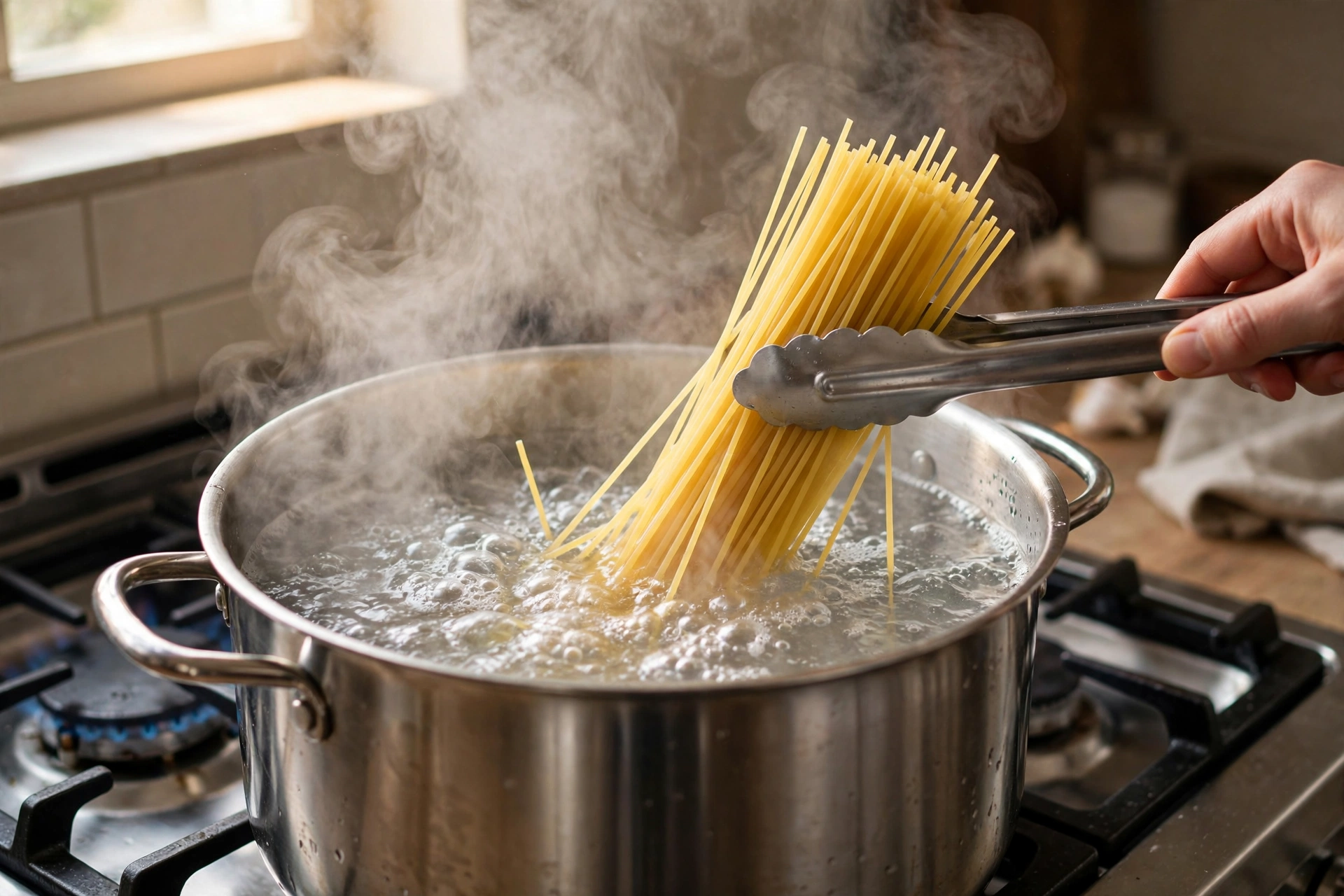
Use about a gallon of water per pound of pasta — pasta needs room to move, or it sticks and cooks unevenly. If you measure by volume, here is how many ounces are in a gallon (128). A 6- to 8-quart pot handles a pound comfortably.
Salt the Water — Generously
Once the water is at a full rolling boil, add about 1 tablespoon of kosher salt per gallon — it should taste “like the sea.” Most of it goes down the drain, but the pasta absorbs just enough to taste like something instead of wet cardboard. Salt before adding the pasta.
Time It, Then Taste It
Cook one minute less than the box says, then taste every 30 seconds. You want al dente — firm in the center with a little bite, not crunchy, not mushy. Box times assume you like soft pasta, so your teeth are the real timer. Fresh pasta cooks in 2 to 4 minutes, so do not walk away.
Save the Pasta Water
Before draining, scoop out a cup of starchy pasta water. When you toss pasta with sauce, splash in a few spoonfuls — the starch binds sauce to pasta instead of letting it slide off.
Never Rinse (Almost)
Do not rinse after draining (unless it is a cold pasta salad) — rinsing washes off the starch that helps sauce cling. And never add oil to the cooking water; it coats the pasta and keeps sauce from sticking.
Part 2: Fresh Egg Pasta From Scratch
Fresh pasta sounds like a project, but the dough is two ingredients and ten minutes of work. The rest is resting and rolling.
The Dough
For about 4 servings, you need:
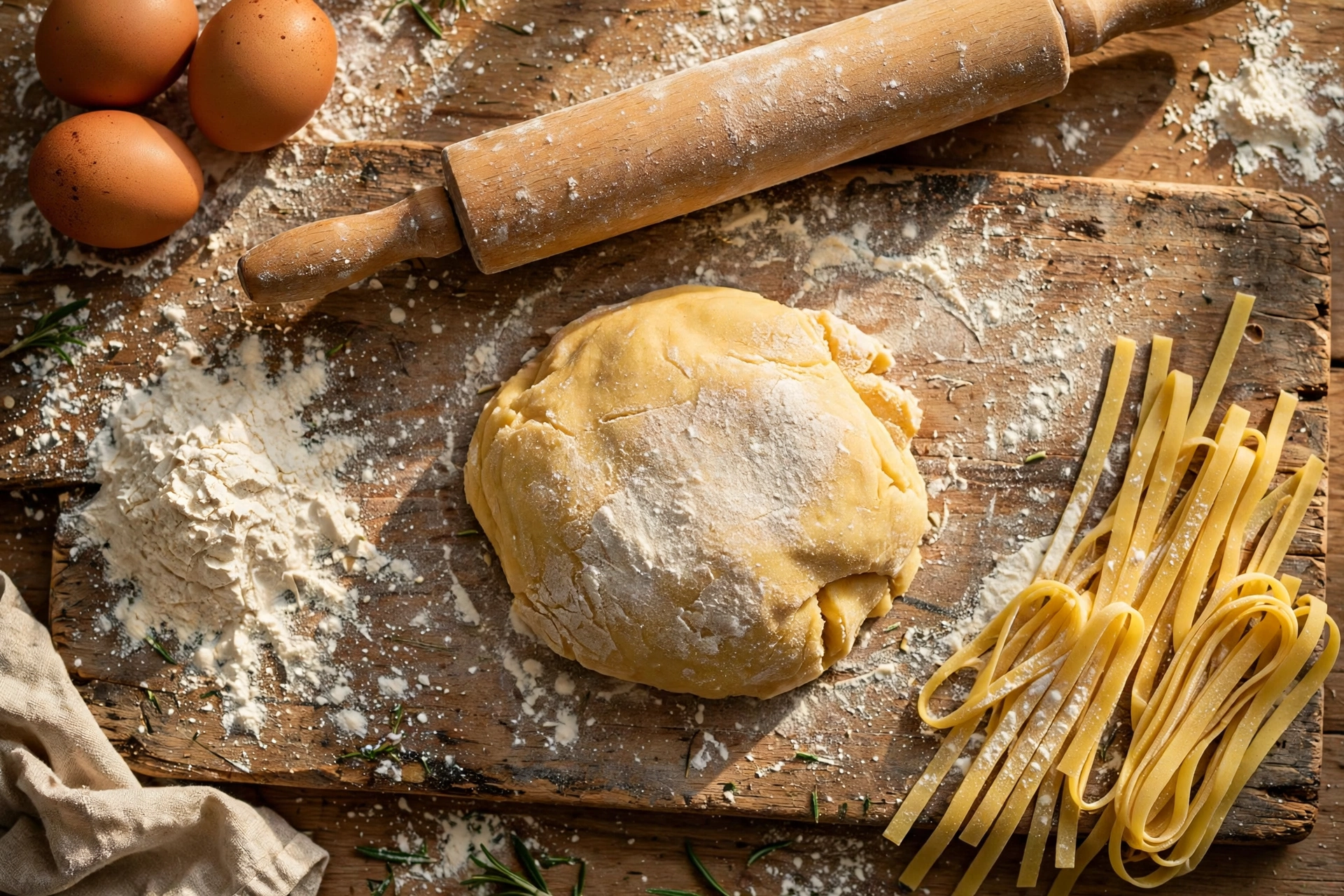
- 2 cups (about 250 g) all-purpose or “00” flour
- 3 large eggs
- A pinch of salt
Pile the flour on a counter or in a bowl, make a well, crack in the eggs, add the salt. Beat the eggs with a fork, pulling flour in from the edges, until too thick to stir. Then knead by hand for 8 to 10 minutes, until smooth and springy like a firm stress ball — not sticky, not cracking.
Sticky? Dust in flour a teaspoon at a time. Cracking? Wet your hands and knead more. Then wrap in plastic and rest 30 minutes — the rest relaxes the gluten and makes rolling easier. Skip it and the dough will fight you.
Rolling and Cutting
Divide the dough into four pieces; work with one at a time, keeping the rest covered. Roll on a floured surface, turning and flipping, until you can almost see your hand through it — paper-thick for fettuccine, thinner for lasagna.
For fettuccine, loosely roll the sheet into a log, slice quarter-inch strips, unroll, and toss with flour so they do not stick. For lasagna, cut sheets to fit your pan. For pappardelle, go wider — about an inch.
Cooking Fresh Pasta
Fresh pasta cooks in 2 to 4 minutes in well-salted boiling water. It floats when close to done, but taste one to be sure. Save a cup of pasta water, and toss with sauce right away. Fresh pasta with a simple sauce is one of the best nearly-free meals you can make at home.
Sauce: Keep It Simple
Good pasta does not need a complicated sauce:
- Butter + parmesan + pepper: Melt butter, toss with hot pasta, parmesan, and pasta water. Five minutes.
- Tomato + basil: Canned tomatoes, garlic, olive oil, salt, fresh basil. Simmer 20 minutes.
In every case, finish the pasta in the sauce for the last minute, with a splash of pasta water. That is what makes it taste like a restaurant dish.
Serve with something cold — iced tea, or cold brew coffee if dinner runs late. Pasta night does not need to be fancy: salted water, a timer, and a cup of pasta water saved before you drain.
FAQ
How much pasta do I need per person?
About 4 ounces (115 g) of dried pasta per person for a main course, 2 ounces as a first course. Fresh pasta is more filling — 3 to 4 ounces is plenty.
Can I make fresh pasta without eggs?
Yes — use water instead of eggs (about 1 cup flour to 1/3 cup water, plus salt). It is chewier and less rich, the traditional style in parts of southern Italy. The same rolling and cutting steps apply.
Why does my fresh pasta dough keep tearing?
Usually it did not rest long enough, or it is too dry. Give it the full 30-minute rest, and knead in a few drops of water if it cracks. Roll gently — pushing hard tears the sheet.
How long does fresh pasta keep?
Fresh pasta keeps 2 to 3 days in the fridge (toss cut noodles with flour, keep covered), or up to 3 months frozen. Cook from frozen — add a minute or two.




2 Comments