




Kitchen countertops influence how a kitchen looks, feels, and works every day. From preparing breakfast to cooking family meals, homeowners need surfaces that can handle regular activity while complementing the surrounding design. However, selecting the right countertop material can feel difficult when there are so many colors, patterns, finishes, and price options available. Granite remains […]
Kitchen countertops influence how a kitchen looks, feels, and works every day. From preparing breakfast to cooking family meals, homeowners need surfaces that can handle regular activity while complementing the surrounding design. However, selecting the right countertop material can feel difficult when there are so many colors, patterns, finishes, and price options available. Granite remains a popular choice because it offers natural beauty, excellent durability, and a wide variety of designs. Unlike manufactured surfaces with repeated patterns, each granite slab has its own mineral details and color variations. Therefore, homeowners can create a kitchen that feels personal while enjoying the practical advantages of natural stone. The right granite countertop should offer more than visual appeal. It should match the kitchen layout, support daily cooking habits, and fit within a realistic renovation budget. By understanding the material’s benefits, maintenance needs, installation requirements, and pricing factors, homeowners can make a more confident decision.
Why Granite Remains a Popular Kitchen Countertop Material
Many homeowners consider granite countertops for kitchen renovations because the material combines natural appearance with practical strength. Granite forms through geological processes that create a dense stone with distinctive minerals and patterns. As a result, no two slabs look exactly alike, which gives each finished countertop a unique appearance. Moreover, granite works with many kitchen design styles. Light-colored granite can complement white cabinets and bright interiors, while darker stone can create a strong contrast with natural wood cabinetry. Therefore, homeowners can find options that suit traditional, transitional, and contemporary spaces. Granite also provides good resistance to scratches and everyday heat. However, it still requires proper maintenance, including suitable sealing when necessary. With regular care and professional installation, granite can remain an attractive kitchen surface for many years.
Key Takeaways
- Granite combines natural beauty with durability: Its unique patterns, hardness, and heat resistance make it suitable for busy kitchens.
- Material selection affects the overall budget: Slab quality, color, thickness, edge design, and installation requirements influence countertop expenses.
- Proper installation and maintenance matter: Accurate measurements, suitable sealing, and simple cleaning habits help protect granite surfaces.
Choose Granite Colors That Complement Your Kitchen
Color plays an important role in countertop selection because it influences the overall appearance of the kitchen. However, homeowners should not choose granite based only on a showroom sample. Cabinet finishes, backsplash tiles, flooring, and lighting can change how a particular granite color appears. Therefore, the complete kitchen design should guide the selection.
White Granite for Bright and Open Kitchens
White granite is a popular option for homeowners who prefer a clean and welcoming appearance. Many varieties contain gray, black, cream, or gold mineral patterns that add visual interest. Additionally, light granite can make smaller kitchens feel more open by reflecting available light. White cabinets paired with a softly patterned granite surface create a consistent look, while dark cabinets introduce contrast. However, lighter stone may make certain spills more noticeable. Therefore, homeowners should follow suitable cleaning and sealing practices.
Black Granite for a Modern Appearance
Black granite creates a strong visual feature in contemporary kitchens. It works particularly well with white cabinets, light wood finishes, and metallic hardware. Some black granite varieties feature subtle silver or gold mineral details. As a result, the countertop can add depth without overwhelming the surrounding design. Nevertheless, very dark polished surfaces may show fingerprints, dust, and water spots more clearly. Homeowners should consider their cleaning preferences before choosing this finish.
Gray, Brown, and Beige Granite for Balanced Interiors
Neutral granite colors provide flexibility because they complement a broad range of cabinets and flooring materials. Gray granite can create a cool, modern atmosphere, while beige and brown shades introduce warmth. Additionally, neutral stone often coordinates well with natural wood cabinets and traditional kitchen finishes. For homeowners who expect to update cabinet hardware or wall colors later, versatile granite shades may provide greater design flexibility.
Consider Granite Patterns and Surface Finishes
Granite comes in different patterns, ranging from fine mineral specks to large flowing movements. However, the pattern should match the kitchen’s size and overall design. A small kitchen with patterned backsplash tiles may benefit from a quieter countertop. Meanwhile, a spacious kitchen island can display stronger stone movement without making the room feel crowded.
Subtle Patterns for Simple Kitchen Designs
Fine-grained granite offers a balanced appearance that works well with detailed cabinets and decorative flooring. For example, a kitchen with traditional cabinet doors may already have several visual features. A softer granite pattern can prevent the design from appearing too busy. Additionally, subtle patterns can help create a timeless appearance that remains attractive as decorative preferences change.
Dramatic Veining for Kitchen Islands
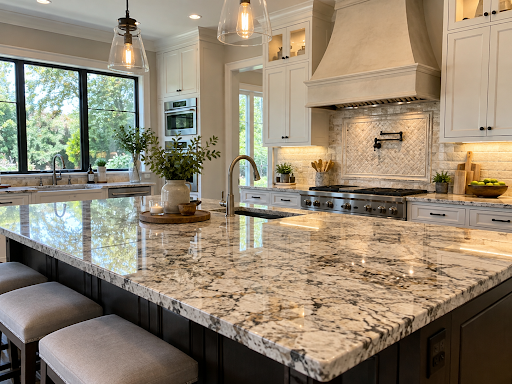
Large kitchen islands provide an opportunity to highlight natural stone patterns. Bold mineral movement can turn an island into a noticeable design feature. However, sink openings, cooktops, and seams can interrupt the pattern. Therefore, homeowners should review the slab layout before fabrication. I recommend comparing full slabs whenever possible because small samples may not show the complete natural pattern.
Polished, Honed, and Leathered Finishes
Granite finishes affect both appearance and daily maintenance.
| Granite Finish | Appearance | Main Consideration |
| Polished | Smooth, glossy, reflective | Highlights natural color and movement |
| Honed | Soft, matte, less reflective | Can show certain marks depending on the stone |
| Leathered | Textured with a low sheen | Offers a distinctive surface feel |
The right finish depends on personal preferences and everyday use. Additionally, maintenance needs can vary between different granite varieties.
Therefore, homeowners should examine actual samples rather than relying entirely on photographs.
Understand Granite Countertop Costs Before Buying
Budget planning is one of the most important parts of a kitchen renovation. Although granite offers long-term durability, the total expense depends on the chosen material and installation requirements. Homeowners researching the cost of granite countertops can compare slab grades, material choices, and fabrication expenses before finalizing their purchase. The price of granite does not depend only on the number of square feet needed. Stone selection, edge finishing, sink cutouts, and installation complexity can also influence the estimate. For example, a standard rectangular countertop may require less fabrication work than a large kitchen island with curved edges and several openings. Additionally, rare granite patterns or premium slabs may cost more than commonly available varieties.
Factors That Influence Granite Pricing
| Cost Factor | Effect on Total Expense |
| Granite grade | Premium or less common slabs may carry higher prices |
| Countertop size | Larger surfaces generally need more material |
| Slab thickness | Thicker options may affect material and fabrication expenses |
| Edge profile | Decorative edges may require additional work |
| Sink and cooktop cutouts | Openings increase fabrication requirements |
| Installation complexity | Difficult access, seams, and unusual layouts can add labor |
| Removal of old countertops | Demolition and disposal may involve extra charges |
Manage Countertop Expenses Without Sacrificing Quality
Homeowners can often control renovation expenses through careful material selection. For example, choosing a commonly available granite color may reduce material costs. Similarly, a simple edge profile can provide an attractive finish without requiring complicated fabrication. Maintaining the existing cabinet layout can also help avoid unnecessary remodeling work. However, the lowest quote does not always represent the greatest value. Homeowners should compare the quality of the stone, fabrication details, installation services, and warranty terms. A detailed written estimate makes it easier to understand the complete project cost and identify possible additional charges.
Match Granite Countertops With Kitchen Cabinets and Backsplashes
Countertops rarely stand alone in a kitchen design. Cabinets, wall colors, flooring, and backsplash materials all contribute to the finished appearance. Therefore, selecting these elements together helps create a more coordinated space.
Granite With White Kitchen Cabinets
White cabinets work with many granite colors because they provide a neutral background. Black granite creates a bold contrast, while white or gray granite supports a softer design. Meanwhile, beige and gold granite can introduce warmth. However, homeowners should compare the undertones of each material. Some white cabinets have warm cream tones, while others appear cooler. Matching these details can improve the overall appearance.
Granite With Natural Wood Cabinets
Wood cabinets often work well with granite that contains cream, gray, brown, or black mineral patterns. For example, light oak cabinetry can create a warm atmosphere when paired with subtle beige granite. Dark walnut cabinets may look more balanced with lighter stone. Additionally, granite patterns should complement the visible wood grain instead of competing with it.
Choosing a Coordinated Backsplash
A backsplash protects the wall behind kitchen work areas while contributing to the overall design. Simple subway tiles often pair well with dramatic granite patterns. On the other hand, a countertop with subtle movement may allow homeowners to choose a more decorative backsplash. Therefore, I recommend comparing backsplash samples directly beside the selected granite before making a final decision.
Evaluate Granite Durability and Daily Maintenance
Granite is a hard natural stone that performs well in many residential kitchens. However, durability does not mean that the surface is completely resistant to damage. Sharp impacts can chip exposed edges, and certain spills may cause staining if the stone lacks suitable protection. Additionally, not every granite variety has the same porosity or maintenance requirements.
Granite and Heat Resistance
Granite generally handles everyday kitchen heat better than many countertop materials. However, placing extremely hot cookware directly on a cold stone surface may create thermal stress. Therefore, using trivets or heat-resistant pads remains a sensible precaution. This simple habit also helps protect sealers and surrounding materials.
Scratch and Stain Protection
Granite provides good scratch resistance during regular kitchen activities. Nevertheless, cutting boards are still important. They protect the countertop surface while also helping preserve knife edges. Some granite countertops require periodic sealing to reduce liquid absorption. The appropriate schedule depends on the specific stone, finish, sealer, and usage conditions.
Simple Granite Cleaning Habits
Regular cleaning helps granite maintain its appearance.
Useful maintenance practices include:
- Wiping spills promptly with a soft cloth.
- Cleaning with mild soap and water or a suitable stone cleaner.
- Avoiding harsh acidic or abrasive cleaning products.
- Using cutting boards during food preparation.
- Protecting countertop edges from heavy impacts.
- Checking whether sealing remains effective when recommended.
These habits are generally simple and do not require complicated cleaning routines. As a result, granite can remain practical for households that cook and entertain regularly.
Plan Countertop Measurements and Professional Installation
Even high-quality granite can create problems when measurements or installation details are incorrect. Therefore, professional templating and fabrication play important roles in the overall project. Before installation, the team should confirm cabinet dimensions, sink locations, appliance clearances, and countertop overhang requirements.
Why Accurate Measurements Matter
Countertops must fit the available kitchen space while accommodating cabinets, walls, and appliances. For example, an incorrect sink opening may delay installation or require additional fabrication work. Similarly, uneven cabinets can affect countertop support and alignment. Therefore, installers should review existing conditions before preparing the final stone pieces.
Edge Profiles and Seams
Countertop edges influence both appearance and comfort. Simple eased edges work well in contemporary kitchens, while rounded or decorative profiles may complement traditional designs. Seam placement also deserves attention, particularly when a kitchen requires multiple stone pieces. Although seams may remain visible, careful planning can help make them less noticeable and support proper installation.
Installation and Final Inspection
Before approving the completed project, homeowners should review countertop alignment, sink openings, edge finishing, and visible seams. Additionally, the installer should explain appropriate cleaning and sealing requirements. For a kitchen renovation in Milwaukee, working with a local fabrication and installation team may also make it easier to discuss material availability, site measurements, and project scheduling.
Compare Granite With Other Countertop Materials
Granite is not the only option for kitchen countertops. Quartz, quartzite, laminate, and other materials offer different advantages. Therefore, homeowners should compare their choices according to appearance, maintenance, durability, and budget.
Granite vs. Quartz
Granite is natural stone, while engineered quartz combines quartz minerals with binding materials. Granite offers unique mineral patterns and good heat resistance. Meanwhile, quartz provides more consistent designs and usually does not require sealing. However, quartz can be sensitive to excessive heat because of its resin content. The better option depends on how the homeowner uses the kitchen and what appearance they prefer.
Granite vs. Marble
Marble offers elegant veining and a classic appearance. However, it is generally softer than granite and more vulnerable to acid etching. Granite may be a more practical choice for homeowners who want natural stone with greater resistance to everyday kitchen wear. Nevertheless, both materials require appropriate maintenance.
Granite vs. Laminate
Laminate countertops are often more affordable and come in many decorative patterns.
However, they generally provide less resistance to heat and physical damage than granite.
For homeowners planning a long-term kitchen renovation, natural stone may offer a different balance of initial expense, durability, and appearance.
Choose the Right Countertop Supplier for Your Project
Selecting granite requires more than finding an attractive slab. Homeowners should also evaluate fabrication quality, installation experience, product selection, and customer support. A visit to a local countertop store allows homeowners to compare material colors, inspect surface finishes, and discuss important project requirements. Additionally, seeing full slabs can provide a clearer understanding of natural variations than viewing small samples online. Badger Granite offers natural and engineered countertop options, including granite, quartz, marble, and quartzite, along with countertop fabrication and installation services. However, homeowners should still review the proposed project scope, product specifications, and written estimate before making a final decision.
Questions to Ask Before Purchasing Granite
A useful discussion with a countertop supplier should cover several topics:
- Can the homeowner view the exact slab selected for the project?
- Does the estimate include templating, fabrication, and installation?
- Are sink cutouts and edge finishing included?
- How will the team determine seam locations?
- Does the chosen stone require sealing?
- What warranties or installation protections apply?
- What preparation must happen before installation?
Clear answers can help homeowners compare suppliers and understand the full purchase process. Furthermore, asking these questions early may prevent misunderstandings after the stone enters fabrication.
Conclusion
Granite kitchen countertops offer a combination of natural beauty, durability, and design flexibility. However, choosing the right slab requires careful consideration of color, pattern, finish, installation requirements, and long-term maintenance. Homeowners should also compare material prices and fabrication expenses before setting a final renovation budget. By reviewing full slabs, coordinating surrounding finishes, and asking detailed questions, they can select a countertop that supports both everyday use and the kitchen’s overall appearance. Ultimately, a successful granite countertop project is not about choosing the most expensive stone. It is about finding a durable, attractive surface that fits the household’s needs, complements the kitchen design, and provides lasting value.