



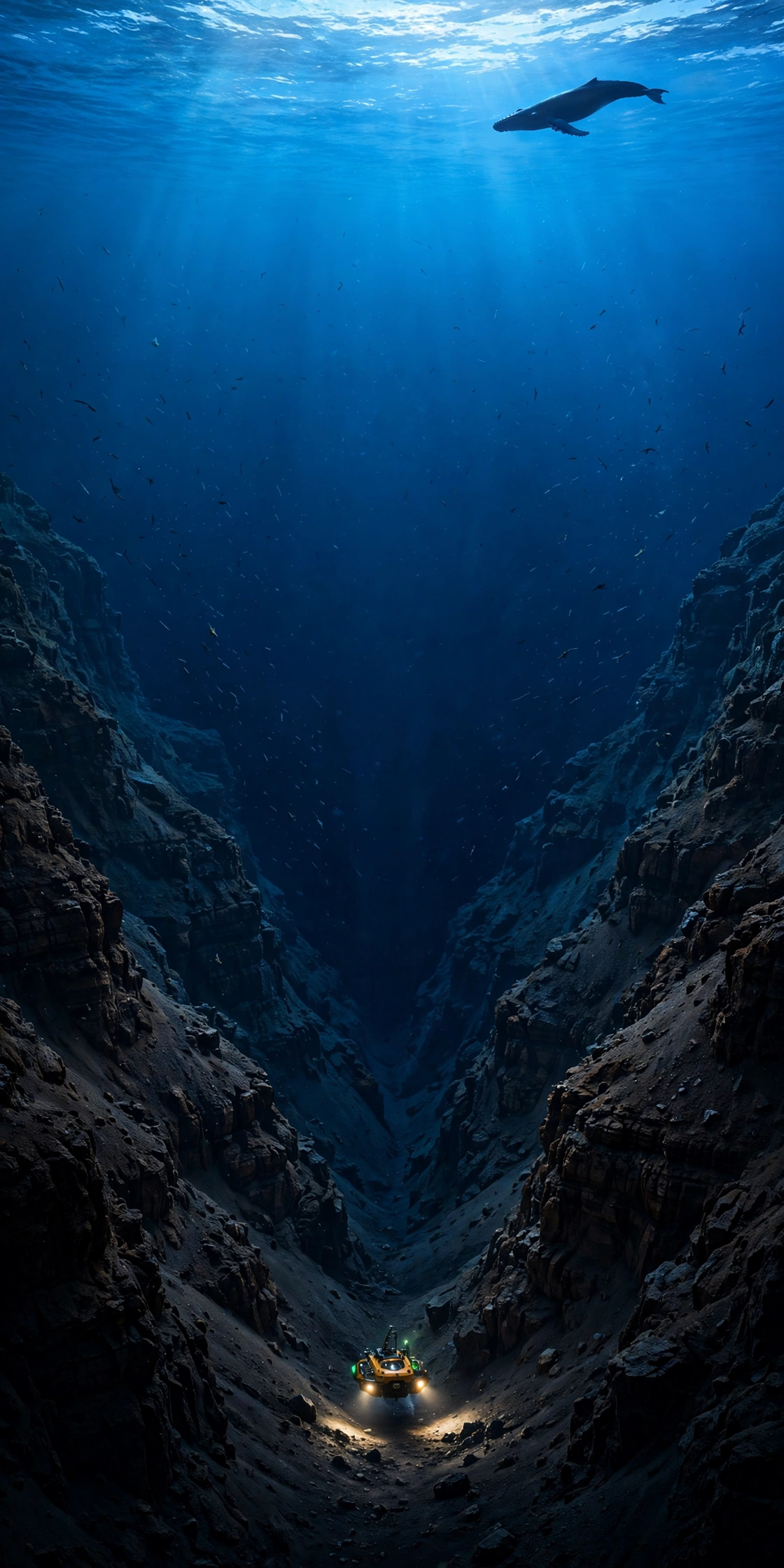
How deep is the Mariana Trench? The deepest point, a spot called Challenger Deep, drops to about 10,935 meters below the surface. That's roughly 35,876 feet — just under 7 miles of ocean stacked on top of one point. It's the deepest known place on Earth, east of the Philippines in the western Pacific Ocean. […]
How deep is the Mariana Trench? The deepest point, a spot called Challenger Deep, drops to about 10,935 meters below the surface. That's roughly 35,876 feet — just under 7 miles of ocean stacked on top of one point. It's the deepest known place on Earth, east of the Philippines in the western Pacific Ocean.
To give you a feel for that number: drop a rock from the surface there and it falls for the better part of an hour before hitting bottom. Nobody has found a deeper spot anywhere on Earth.
The Short Answer: Challenger Deep's Depth
The trench itself is a crescent-shaped scar on the ocean floor about 2,550 kilometers (1,580 miles) long, but its depth varies along that length. The deepest measured point, Challenger Deep, sits at the southern end.
The 10,935-meter figure comes from careful sonar surveys and direct measurements by submersibles. Older sources cited slightly different numbers — the figure has shifted as measuring tools got better — but every serious survey in recent years lands right around 10,935 meters, so that's the number to trust.
What 10,935 Meters Actually Feels Like
Raw numbers that big are hard to picture, so comparisons help.
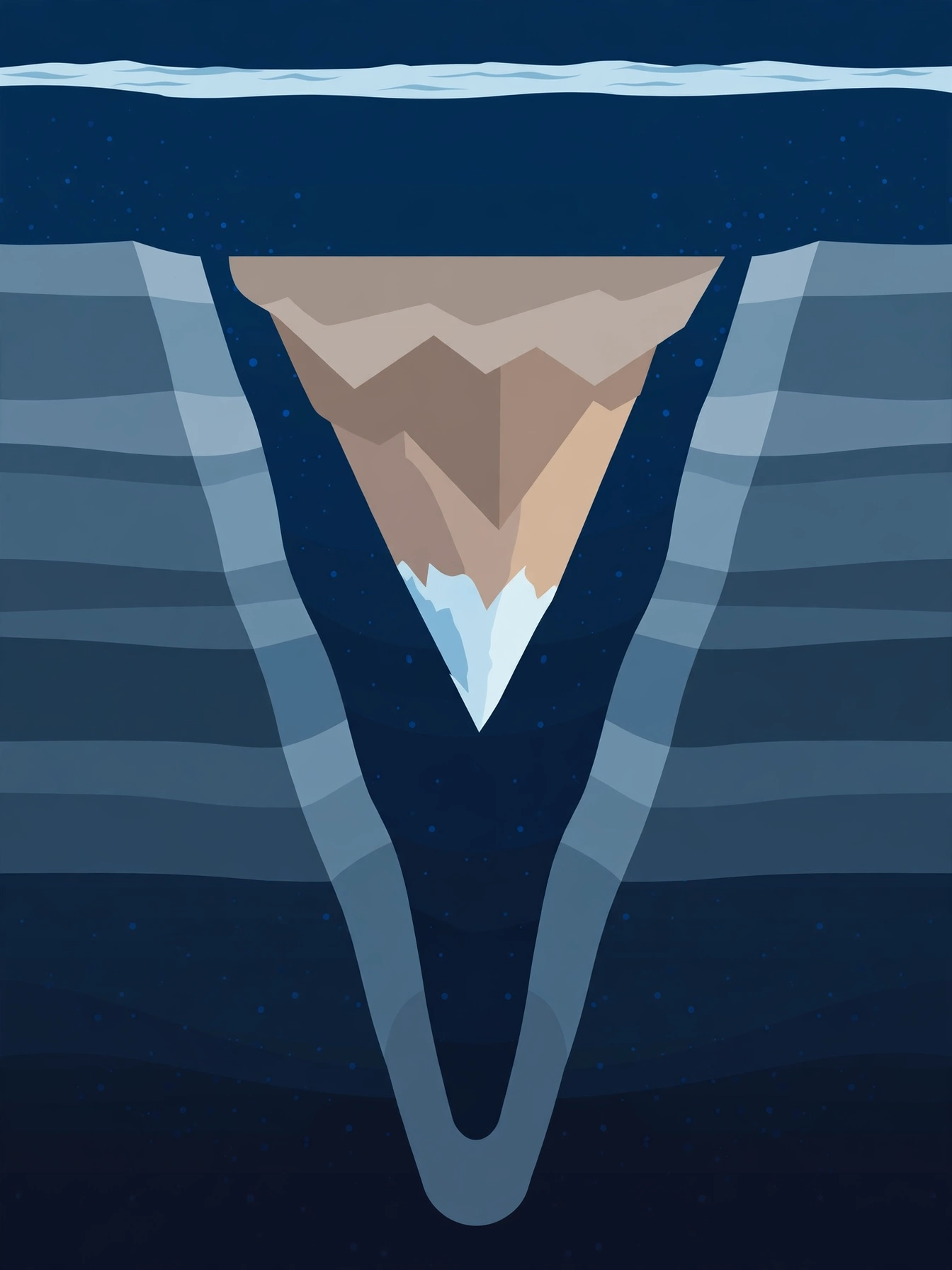
Mount Everest. The world's tallest mountain stands 8,849 meters above sea level. If you plopped Everest upside-down into the trench, its peak would still sit more than 2 kilometers *below* the surface.
Empire State Buildings. The Empire State Building is about 381 meters to its roof (443 meters to the antenna tip). Stack Empire State Buildings on top of each other at Challenger Deep and you'd need around 28 of them before the top one broke the surface.
Commercial airplanes. A cruising jet flies at about 11,000 meters. Look out the window on a flight — the trench's depth is almost exactly that far straight down. Only instead of air, it's all crushing ocean water.
How We Know It's That Deep
Nobody has stretched a tape measure down there. Two methods cross-check each other.
Multibeam sonar. Research ships send sound waves to the seafloor and time the echo's return. The current figure comes from a 2021 survey combining several expeditions' sonar data.
Submersibles. Crewed submersibles that have reached the bottom carry pressure sensors. At Challenger Deep the water pressure is about 1,071 atmospheres, over 1,000 times surface pressure, and that reading agrees with the sonar data.
Who Has Actually Been Down There
Very few people. Here's the short list of the big milestones:
- 1960 — The Trieste. U.S. Navy Lieutenant Don Walsh and Jacques Piccard descended in the bathyscaphe *Trieste*, becoming the first humans to reach the bottom. They spent about 20 minutes down there.
- 2012 — James Cameron. The filmmaker dove solo in the *Deepsea Challenger*, becoming the first person to do it alone. He spent roughly three hours on the seafloor.
- 2019 — Victor Vescovo. Explorer Victor Vescovo made a series of dives in the *Limiting Factor*, including a record-setting descent, and his team mapped the trench with modern sonar.
Between those headline dives, remotely operated vehicles and robotic landers have gone down to collect samples, photograph the bottom, and study the life that manages to survive there.
Is Anything Alive Down There?
Yes — and that's one of the strangest parts. The bottom of the trench isn't lifeless. Researchers have found amphipods (small shrimp-like crustaceans), sea cucumbers, xenophyophores (giant single-celled organisms), and even snailfish at depths where the pressure should be unlivable.
None of these creatures are big — the giant pressure limits body size. But the fact that *anything* eats, moves, and reproduces at over 10,000 meters down says life is tougher than we thought. Samples from the trench keep turning up new species, and scientists estimate we've barely scratched the surface of what's down there.
Could It Get Deeper?
Not really. The trench formed where the Pacific Plate slides under the Mariana Plate, bending the ocean crust downward. Geologists map the seafloor constantly, and no survey has found a deeper point. Challenger Deep is about as low as the ocean floor goes.
Frequently Asked Questions
How deep is the Mariana Trench in feet?
The deepest point, Challenger Deep, is about 35,876 feet deep (10,935 meters) — just under 6.8 miles of water straight down. Since a mile holds 5,280 feet, the trench is nearly seven times that.
Is the Mariana Trench deeper than Mount Everest is tall?
Yes. Mount Everest is 8,849 meters above sea level; Challenger Deep is 10,935 meters below it. The difference is a little over 2 kilometers — enough to fit the 828-meter Burj Khalifa more than twice over.
What is at the bottom of the Mariana Trench?
Mud, sediment, and life. The seafloor there is a layer of soft sediment, and robotic surveys have filmed snailfish, amphipods, sea cucumbers, and microbial mats. Humans have visited the bottom only a handful of times — a submersible takes roughly four hours to sink down, a sizable fraction of a day's 86,400 seconds just to get there.
Has anyone ever reached the bottom of the Mariana Trench?
Only a few people. Don Walsh and Jacques Piccard made the first descent in 1960. James Cameron went solo in 2012. Victor Vescovo's team made multiple dives in 2019, setting depth records. Uncrewed robotic vehicles have visited more often.