



Good coffee at home isn’t about expensive gear — it’s about getting a few basics right. Once you understand how to make coffee with the right ratio, grind, and water, you’ll beat most coffee shops. Here are the three easiest methods, from the simplest drip machine to the hands-on pour-over. The Basics Every Method Needs […]
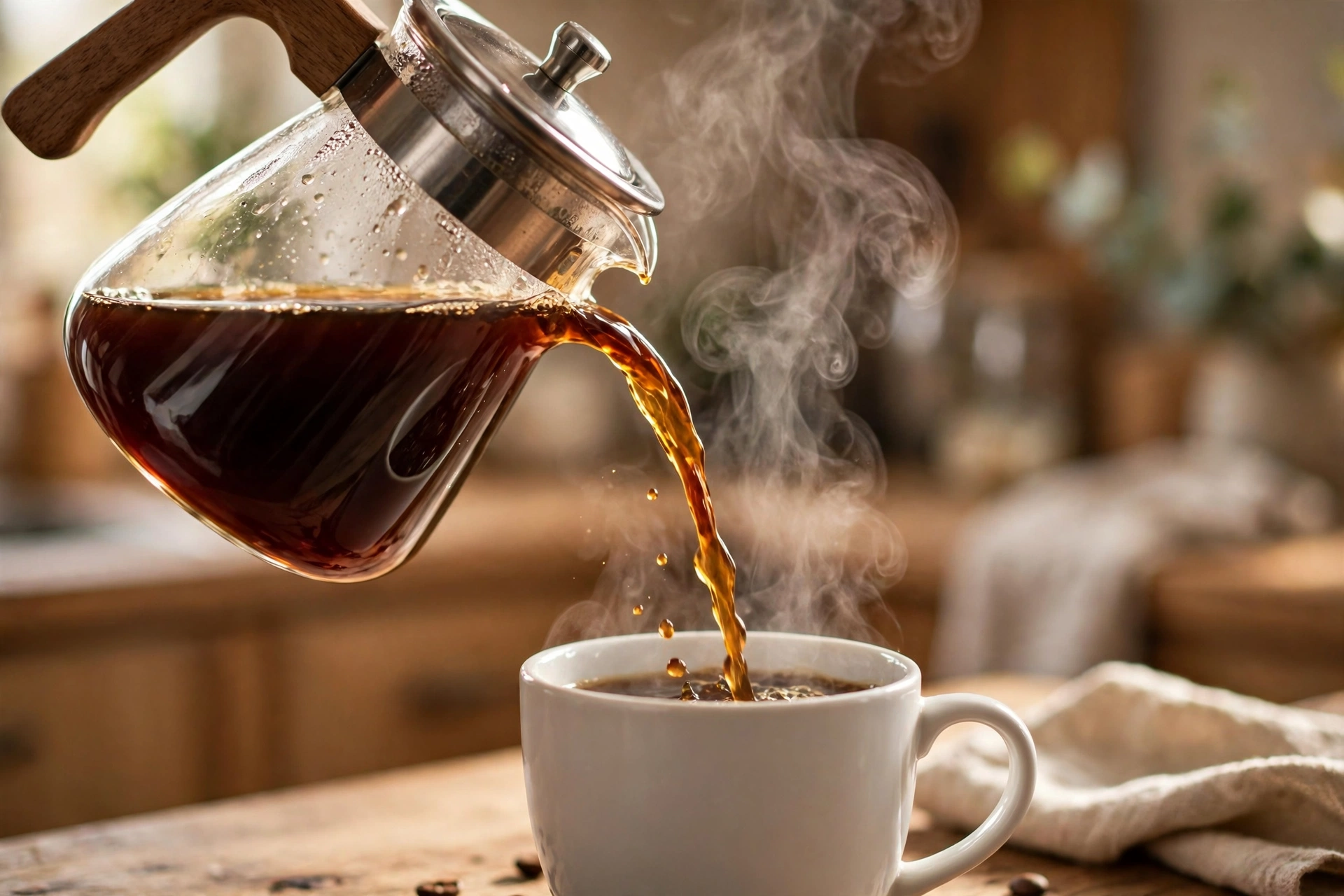
Good coffee at home isn’t about expensive gear — it’s about getting a few basics right. Once you understand how to make coffee with the right ratio, grind, and water, you’ll beat most coffee shops. Here are the three easiest methods, from the simplest drip machine to the hands-on pour-over.
The Basics Every Method Needs
Before you pick a method, nail these fundamentals:
- Fresh beans matter most. Coffee peaks 3–14 days after roasting and fades after a month. Buy smaller bags more often.
- Grind just before brewing. Pre-ground coffee goes stale fast. A basic burr grinder changes everything.
- Water temperature: 195–205°F (90–96°C). Boiling water (212°F) scorches the grounds and makes coffee bitter. Let boiled water sit 30–60 seconds first.
- The golden ratio: Start with 1–2 tablespoons of ground coffee per 6 ounces of water (about 1:15 to 1:17 coffee-to-water by weight). Adjust to taste from there.
Method 1: Drip Coffee Maker (Easiest)
The classic. If you own one, use it well:
- Use a paper filter (rinse it with hot water first to kill the paper taste).
- Add medium-grind coffee — about 2 tablespoons per 6 ounces of water.
- Fill the reservoir with fresh, cold water.
- Brew and drink within 30 minutes; coffee sitting on a hot plate turns bitter fast.
Drip is forgiving and consistent. Its only real sin is the warming plate — transfer coffee to a thermos if you won’t finish it quickly.
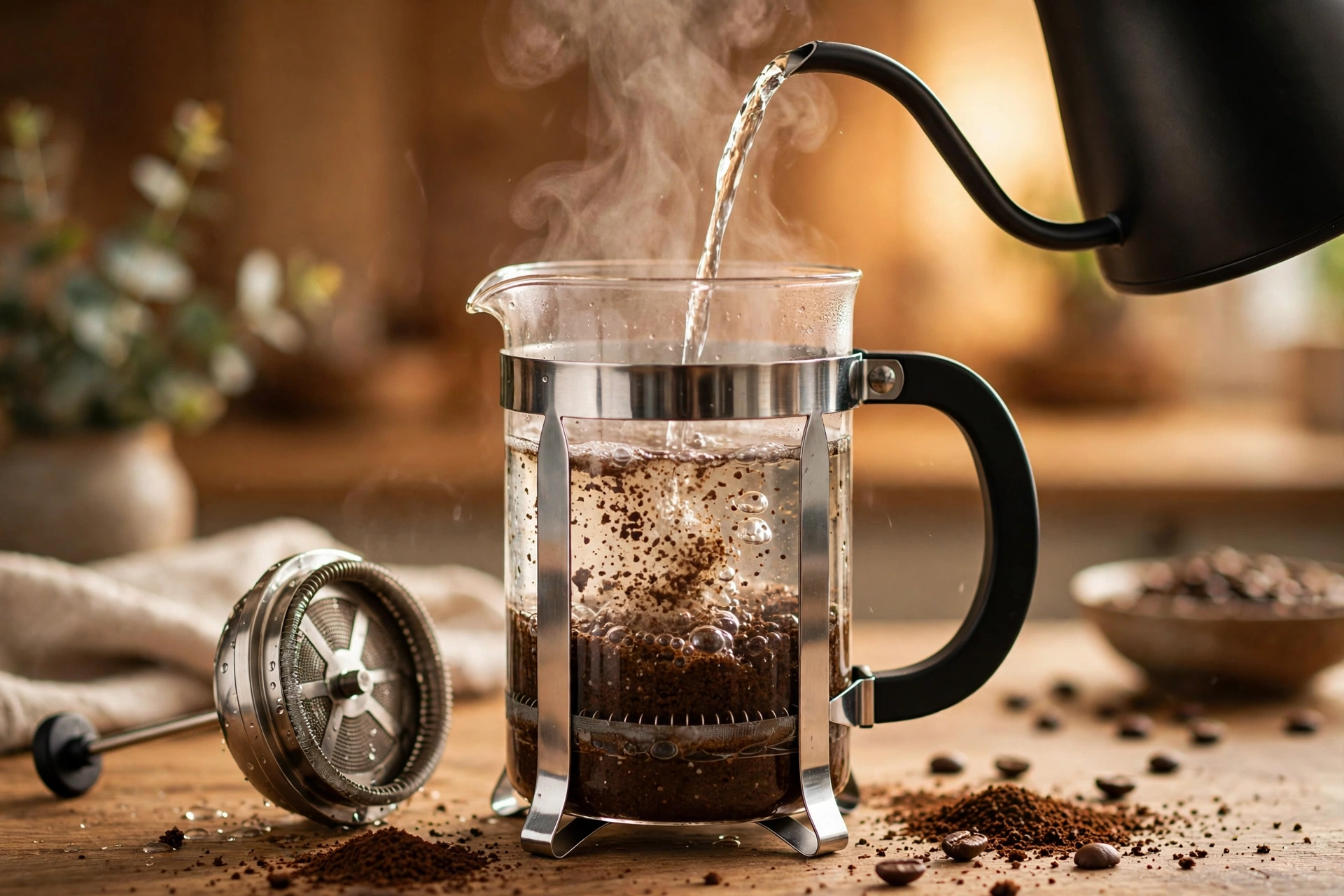
Method 2: French Press (Rich and Full-Bodied)
The French press makes the richest cup of the three because nothing is filtered out — the oils stay in.
- Grind coarse, like breadcrumbs. Fine grounds slip through the mesh and make sludge.
- Add 1 rounded tablespoon of coarse grounds per 4 ounces of water.
- Pour hot (not boiling) water over the grounds, stir gently, and put the lid on with the plunger up.
- Steep for 4 minutes — set a timer, it matters.
- Press the plunger down slowly and evenly. Pour immediately; leaving it sitting keeps extracting and turns bitter.
For a deeper dive on this method, see our guide on how to brew French press correctly.
Method 3: Pour-Over (Cleanest Cup)
Pour-over (V60, Chemex, or similar) gives the brightest, cleanest flavor and the most control.
- Grind medium-fine, like table salt.
- Rinse the paper filter, add grounds (about 1 tablespoon per 5 ounces of water).
- Pour just enough hot water to wet the grounds and wait 30–45 seconds — this is called the “bloom,” and it lets trapped gas escape.
- Pour the rest of the water in slow circles, keeping the water level steady. Total brew time: about 2:30–3:30.
Pour-over takes practice, but once you dial it in, it’s hard to beat.
Common Coffee Mistakes
- Stale beans. The number one reason home coffee tastes flat.
- Wrong grind. Too fine = bitter; too coarse = weak and sour. Match the grind to the method.
- Boiling water. It extracts harsh flavors. Let it cool a touch.
- Dirty equipment. Old coffee oils go rancid. Rinse your brewer and grinder regularly.
- Eyeballing the ratio. A cheap kitchen scale ($10–15) is the fastest upgrade you can make.
Storing Coffee the Right Way
Keep beans in an airtight container at room temperature, away from light. Not the fridge or freezer for daily use — moisture and food smells get in every time you open the bag. (The freezer is fine for long-term storage of unopened bags, but that’s a different topic.)
FAQs
How much coffee should I use per cup? Start with 1–2 tablespoons of ground coffee per 6 ounces of water. Strong-coffee drinkers go heavier; adjust until it tastes right to you.
Why does my homemade coffee taste bitter? Usually the water is too hot, the grind is too fine, or it’s over-extracted (steeped too long). Try cooler water and a coarser grind first.
Is a French press better than a drip machine? Different, not better. French press gives a heavier, oilier cup; drip gives a cleaner, lighter one. Try both and see which you actually enjoy drinking.
How long does brewed coffee stay good? Drink it within 30 minutes for best flavor. After an hour or two it tastes stale, and reheated coffee is never as good as fresh.
Internal links:
- Master the press with How to Brew French Press Correctly.
- For another kitchen staple done right, see How to Boil Eggs.

One thought on “How to Make Coffee at Home: Easy Methods That Actually Work”