




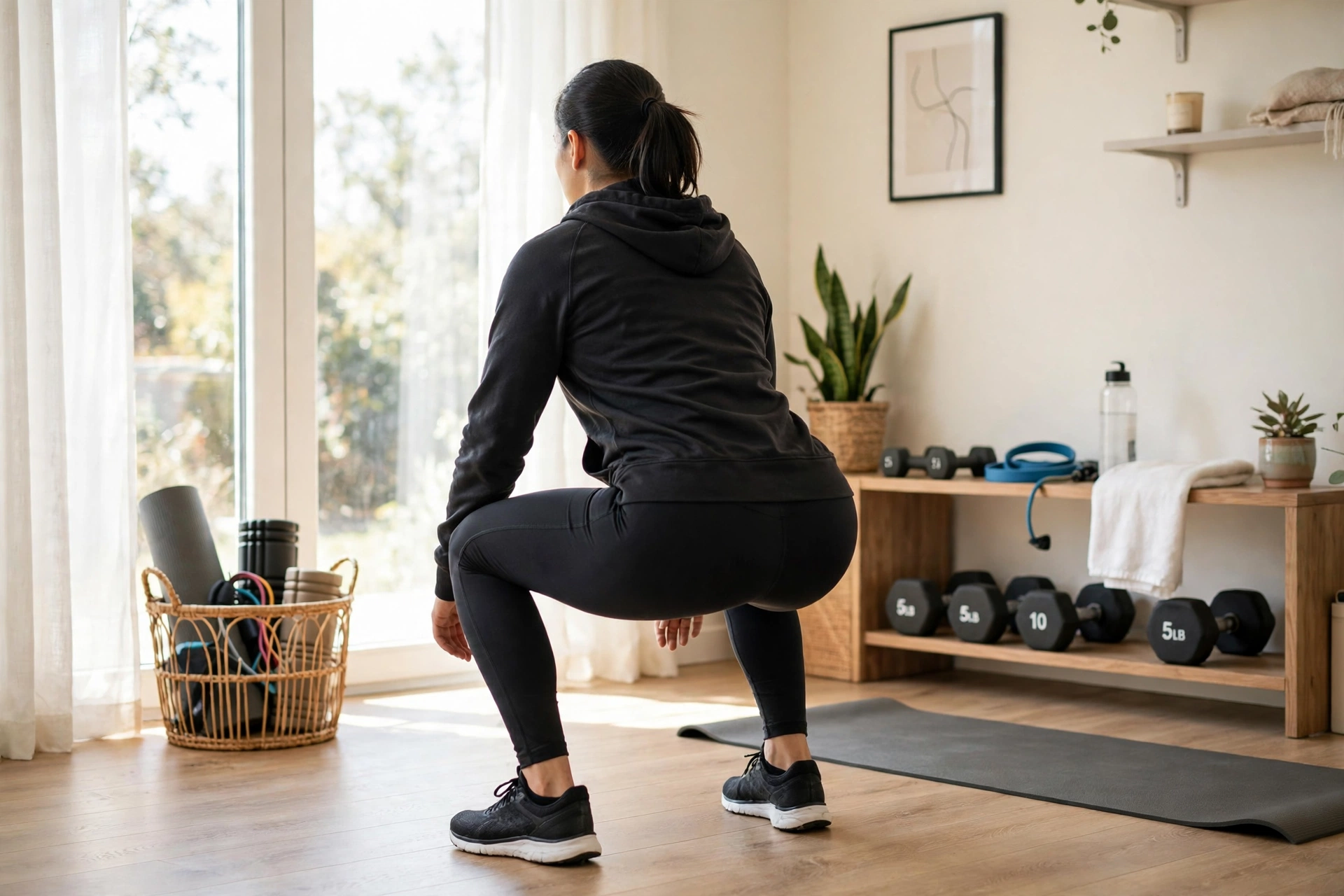
If you want to learn how to do a squat, start with the bodyweight version. No barbell, no gym membership, no fancy gear. You just need a bit of floor space and a few minutes to practice slowly. A good squat builds leg strength and helps with everyday moves like sitting down and standing up. […]
If you want to learn how to do a squat, start with the bodyweight version. No barbell, no gym membership, no fancy gear. You just need a bit of floor space and a few minutes to practice slowly. A good squat builds leg strength and helps with everyday moves like sitting down and standing up.
The trick is not going as low as possible or cranking out fast reps. The trick is control. A slow, steady squat with good positions beats a fast, wobbly one every time.
Stance and Foot Position
Stand with your feet about shoulder-width apart. That works for most people, but it is not a strict rule. If you have longer legs or tighter hips, a slightly wider stance may feel better. Turn your toes out just a little, about 10 to 15 degrees, so your knees can track in the same direction as your toes.
Spread your weight across your whole foot: big toe, little toe, and heel. If you rock forward onto your toes or back onto your heels, reset and find that even pressure again before you start.
Stand tall, chest up, eyes straight ahead.
Brace, Then Move
Before you bend your knees, breathe in and tighten your midsection as if someone were about to poke you lightly in the stomach. That firm trunk keeps your spine neutral through the rep.
Now move in this order:
- Push your hips back slightly, as if sitting into a chair behind you.
- Bend your knees and lower your hips down and back at the same time.
- Keep your chest up and your back flat. A small natural curve in your lower back is fine. Rounding over is not.
- Pause briefly at the bottom.
- Push through your whole foot to stand back up, squeezing your glutes gently at the top without leaning back.
Take two to three seconds down, pause, then one to two seconds up. Arms straight out in front usually help beginners balance.
How Low Should You Go?
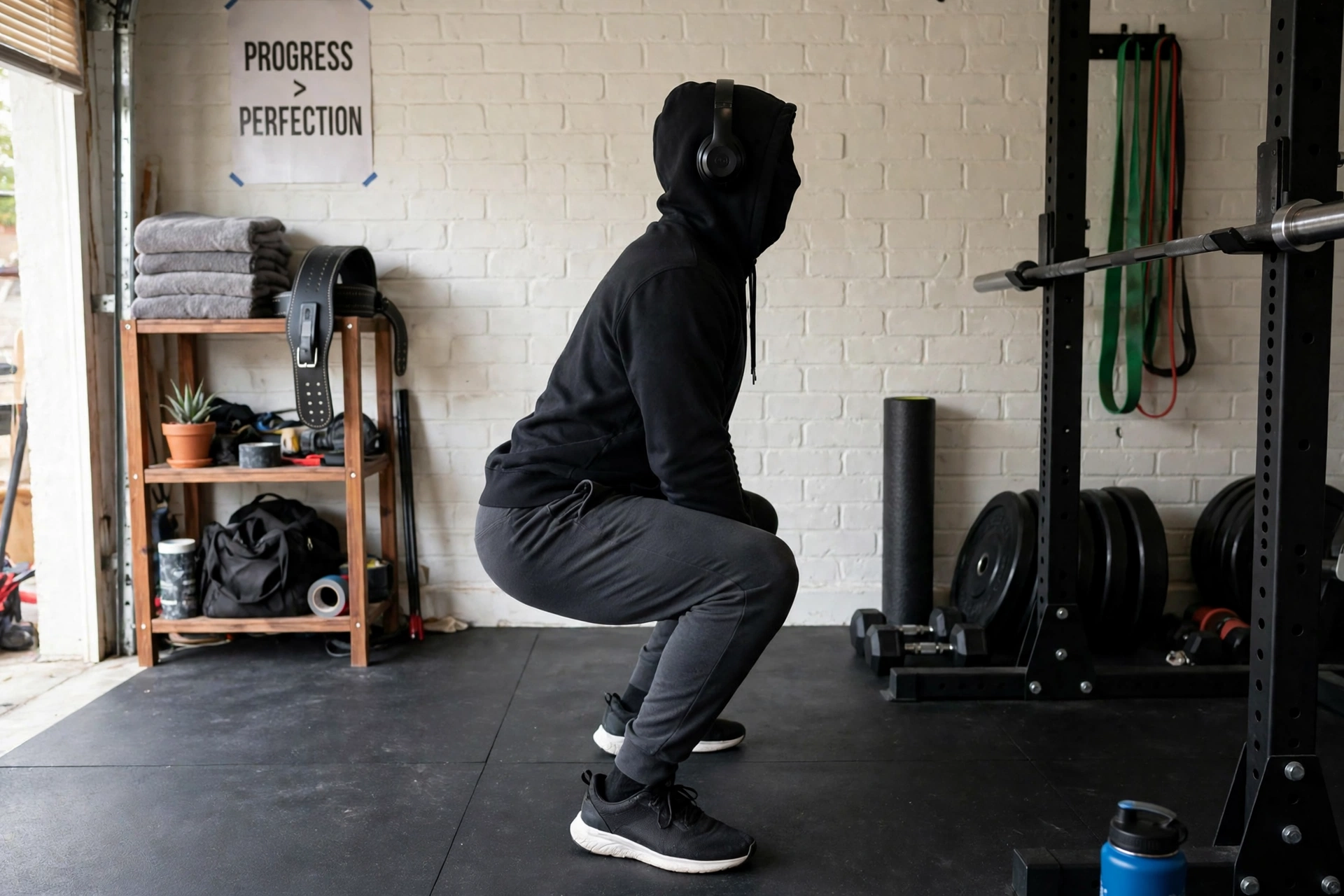
For most beginners, thighs parallel to the floor is a good target. That means the crease of your hip drops to about the level of your knees. Do not force yourself lower, and do not bounce at the bottom to get there.
Depth depends on ankle mobility, hip shape, and leg length. Work with the range you can control with a flat back and heels on the floor; it often improves over weeks of practice.
A sturdy chair makes a useful target: squat until your backside lightly touches the seat, then stand back up, without plopping down or resting.
Breathing
Breathe in as you lower yourself, and out as you push back up. That rhythm keeps the movement steady.
Common Mistakes and Quick Fixes
Knees caving inward. The most common issue when legs tire. Push your knees out gently so they track over your second or third toe.
Heels lifting. You are shifting too far forward or going deeper than your ankles allow. Shorten the range and sit back more.
Rounding the lower back. Often a sign you are going too deep or not bracing. Cut the depth slightly and brace harder before each rep.
Knees far past the toes. A little forward travel is fine for many people. What matters more is heels staying down and your back staying flat.
A Simple Beginner Progression
You do not need to jump straight to full squats. Build up in steps:
1. Chair squats. Squat to a chair and stand back up for 2 to 3 sets of 8 to 10 reps. When this feels easy, move on.
2. Bodyweight squats. Full reps without the chair, same sets and reps. Focus on control, not speed.
3. Wall sits. Slide down a wall until your thighs are roughly parallel to the floor, and hold 20 to 30 seconds.
4. Goblet squats. Hold a dumbbell or heavy book close to your chest. The weight in front helps you stay upright. Start with 5 to 10 pounds.
Start with 2 to 3 sets of 8 to 12 reps, two or three days a week, with a rest day between sessions. Add reps before you add weight.
A short walk before your session works well as a warm-up, and if you want to measure that walk, this guide on how many steps are in a mile gives you a clear way to do it.
When to Get Checked
Some next-day tiredness in the thighs and glutes is normal. Sharp pain, swelling, or worsening pain is different. If squatting hurts in a joint, or you have an old knee, hip, or back injury, talk to a doctor or physiotherapist first. This guide is general information, not medical advice. Good sleep helps recovery too, and this guide on how to stop snoring covers common causes worth checking.
FAQ
How many squats should a beginner do?
Start with 2 to 3 sets of 8 to 12 reps, two or three days a week. Quality matters more than the total number. If your form falls apart halfway through a set, stop, rest, and try again with fewer reps.
Should my knees go past my toes when I squat?
A little is fine for most people, as long as your heels stay on the floor and your back stays flat. The real problems are heels lifting and knees caving inward, not a small amount of forward knee travel.
Why do my knees hurt when I squat?
Common causes are poor knee tracking, going too deep too soon, or doing too much volume too fast. Shorten your range, slow down, and check that your knees track over your toes. If pain is sharp, persistent, or comes with swelling, see a doctor or physiotherapist.
Are squats bad for your knees?
No, squats done with good form are a normal, useful exercise for most healthy people. Problems usually come from bad positions, too much load too soon, or an existing injury. Start with bodyweight reps, progress slowly, and get checked if pain does not settle.