





Boiled eggs sound foolproof until you cut one open and find a rubbery white, a chalky yolk, or that grey-green ring that makes the whole egg look sad. The good news: once you know the timing, boiled eggs are one of the most repeatable things you can cook. No guessing, no poking, no hoping. The […]
Boiled eggs sound foolproof until you cut one open and find a rubbery white, a chalky yolk, or that grey-green ring that makes the whole egg look sad. The good news: once you know the timing, boiled eggs are one of the most repeatable things you can cook. No guessing, no poking, no hoping.
The method below works for a weekday breakfast egg, a batch of deviled eggs, or a dozen eggs for meal prep.
Start With Cold Water
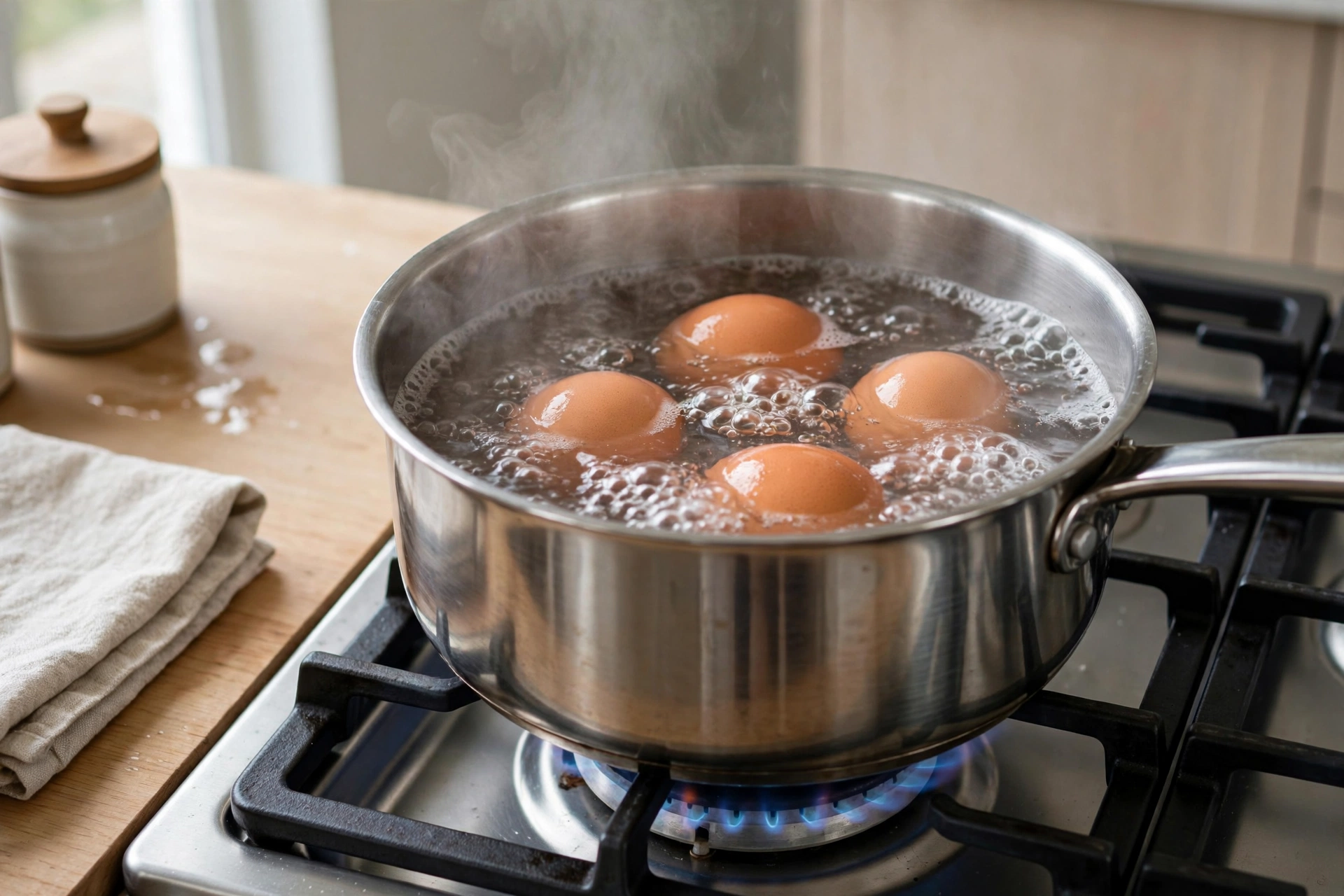
Put your eggs in a single layer in a saucepan, then cover them with cold water by about an inch. Starting with cold water heats the eggs gently, which keeps the shells from cracking the way they sometimes do when dropped into rolling boiling water.
Set the pot over medium-high heat and bring it to a full boil. The second it boils, turn the heat off, put the lid on, and start your timer.
How Long to Boil Eggs: Exact Times
| Style | Time in covered pot | What you get |
|---|---|---|
| Soft-boiled | 6 minutes | Runny yolk, just-set white — great for toast soldiers |
| Jammy / medium | 8 minutes | Custardy yolk that holds its shape when sliced |
| Hard-boiled | 10–12 minutes | Firm yolk all the way through, no soft center |
| Overcooked | 14+ minutes | Dry yolk with a green-grey ring — avoid this |
For most everyday uses — salads, sandwiches, snacking — 10 minutes is the sweet spot. For deviled eggs, go the full 12 so the yolks are firm enough to mash smooth.
The Ice Bath (Do Not Skip This)
While the eggs sit in the covered pot, fill a big bowl with cold water and a tray of ice cubes. When the timer goes off, move the eggs straight into the ice bath with a slotted spoon and leave them there for at least 10 minutes.
How to Peel Boiled Eggs Without a Fight
Peeling is where most people lose patience. A few small tricks make a real difference:
- Use slightly older eggs. Eggs that have been in the fridge for 7–10 days peel more easily than farm-fresh ones, because the membrane slowly loosens from the shell.
- Crack all over. Tap the cooled egg gently on the counter and roll it under your palm so the shell cracks in a fine web, then peel under a thin stream of running water. The water gets under the membrane and helps the shell slide off.
- Start at the wide end. There is a small air pocket at the wide end of the egg. Start peeling there and you get under the membrane in one piece.
How to Store Boiled Eggs
- In the shell: Refrigerate in a covered container for up to 7 days. Keep them in the main part of the fridge, not the door, where the temperature swings.
- Peeled: Store in a covered container with a damp paper towel, and eat within 2–3 days.
- Do not freeze whole boiled eggs. The whites turn rubbery and watery after thawing.
Mark the container with the date you boiled them. Boiled eggs look exactly like raw eggs from the outside, and nobody wants to crack a raw egg into cake batter by mistake.
Quick Ideas for Your Boiled Eggs
Hard-boiled eggs are a quiet workhorse in the kitchen. Slice them over ramen or a rice bowl, chop them into a salad, or mash them with mayo, mustard, and a pinch of paprika for egg salad sandwiches. If you are building a simple breakfast routine, pair them with a pot of how to cook rice for a filling rice bowl, or a mug from your how to make cold brew coffee setup for a breakfast that takes almost no morning effort.
FAQ
How long do you boil eggs for hard-boiled?
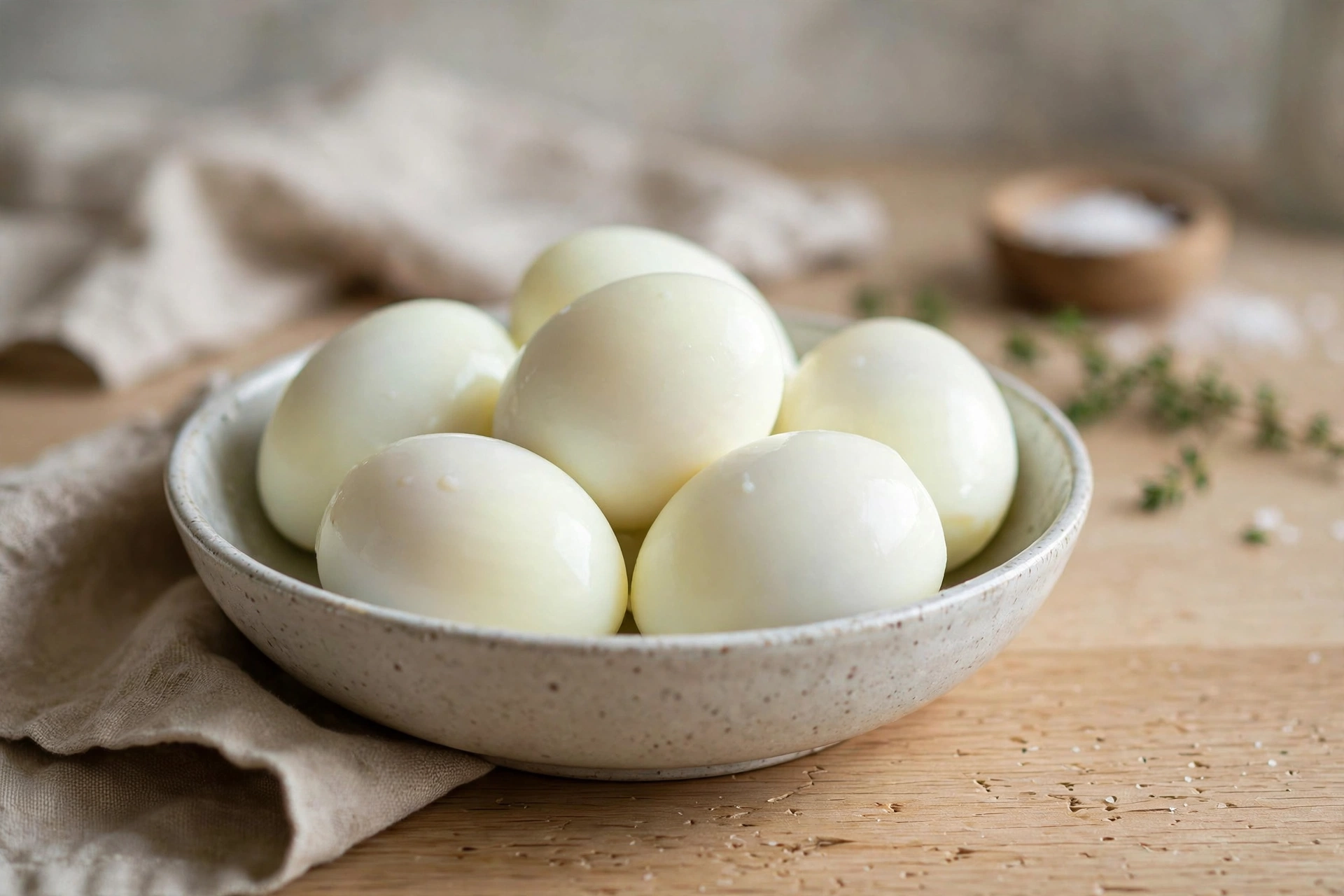
Bring the eggs to a boil in cold water, then cover, turn off the heat, and let them sit for 10–12 minutes. Move them straight into an ice bath for at least 10 minutes.
Should you put eggs in boiling water or cold water?
Cold water is the safer bet. Starting eggs in cold water heats them gently and keeps the shells from cracking.
Why are my boiled eggs hard to peel?
Fresh eggs are the most common cause — the membrane clings tight to the shell. Use eggs that are a week or so old, cool them in an ice bath for a full 10 minutes, and peel under running water starting from the wide end.
Are green yolks safe to eat?
Yes. The green-grey ring is iron sulfide, which forms when eggs are overcooked or cooled too slowly. It is harmless, though it can taste a little sulfury. Stick to the times above and ice the eggs promptly to avoid it.